Wildlife Rescue
Wildlife RescueRaptor Rescue & Rehab
HomeAboutAll That Breathes
BlogContact UsReport A Tagged Bird
Donate Now
Donate
Wildlife Rescue

The world's largest raptor rescue facility, based in Delhi, India. Featured in the Oscar-nominated documentary "All That Breathes." 39,000+ birds rescued since 2010.

Quick Links

  • About Us
  • Our Specialty
  • Species
  • Donate
  • Press & Media
  • All That Breathes
  • CSR Brochure (PDF)
  • Contact

Contact

  • C-6/1, Rehmani Chowk, Street No. 9, Wazirabad Village, Delhi - 110084, IndiaRegd: 2970, Shah Ganj, Ajmeri Gate, Delhi - 110006, India
  • +91 98100 29698
  • nadeem@raptorrescue.org

Stay Updated

Get monthly rescue updates and conservation news.

© 2026 Wildlife Rescue. All rights reserved.

India: 80(G) Tax Exempt Reg. No. AAATW2352B25DL02  |  USA: 501(c)(3) via Raptor Rescue and Research Inc. (EIN: 87-3289299)

International Presentation

Advanced Surgical Repair of the Avian Propatagium

Nadeem Shehzad and Mohammad Saud of Wildlife Rescue presented their refined technique for propatagium repair in raptors at the National Wildlife Rehabilitators Association (NWRA) Symposium — one of the world's most respected gatherings of wildlife rehabilitators and veterinarians.

When

February 2025

Where

Bellevue, WA (Seattle)

Presented by

Shehzad & Saud

Why This Matters

The propatagium is the hardest part of the wing to repair — and also the most commonly injured by manja string.

Every year, tens of thousands of Delhi's raptors — Black Kites, Shikras, Barn Owls, eagles — fall from the sky after catching their wings in manja: the glass-coated kite-flying string that slices through skin, tendons, and bone with equal ease. The single most frequent injury we see is a laceration across the propatagium, the triangular membrane along the leading edge of the wing that holds the wing rigid during flight.

Cut the propatagium and you cut both skin and the underlying tendons — the tensor propatagialis longus and the extensor metacarpi radialis. Standard skin closure is not enough. Without a precise, layered repair of the tendons, the wing heals closed but the bird will never fly properly again — and in the wild, a bird that cannot fly is already dead.

Over 15 years of operating on manja-injured raptors, Wildlife Rescue refined a technique that restores both structure and function. In February 2025, at the NWRA Symposium near Seattle, Nadeem and Saud presented that technique to the international rehabilitation community — showing the staged repair, the day-32 fusion, and the release outcomes that follow.

The Technique, in Three Stages

Stills from the presentation slides — from initial closure to day-32 recovery.

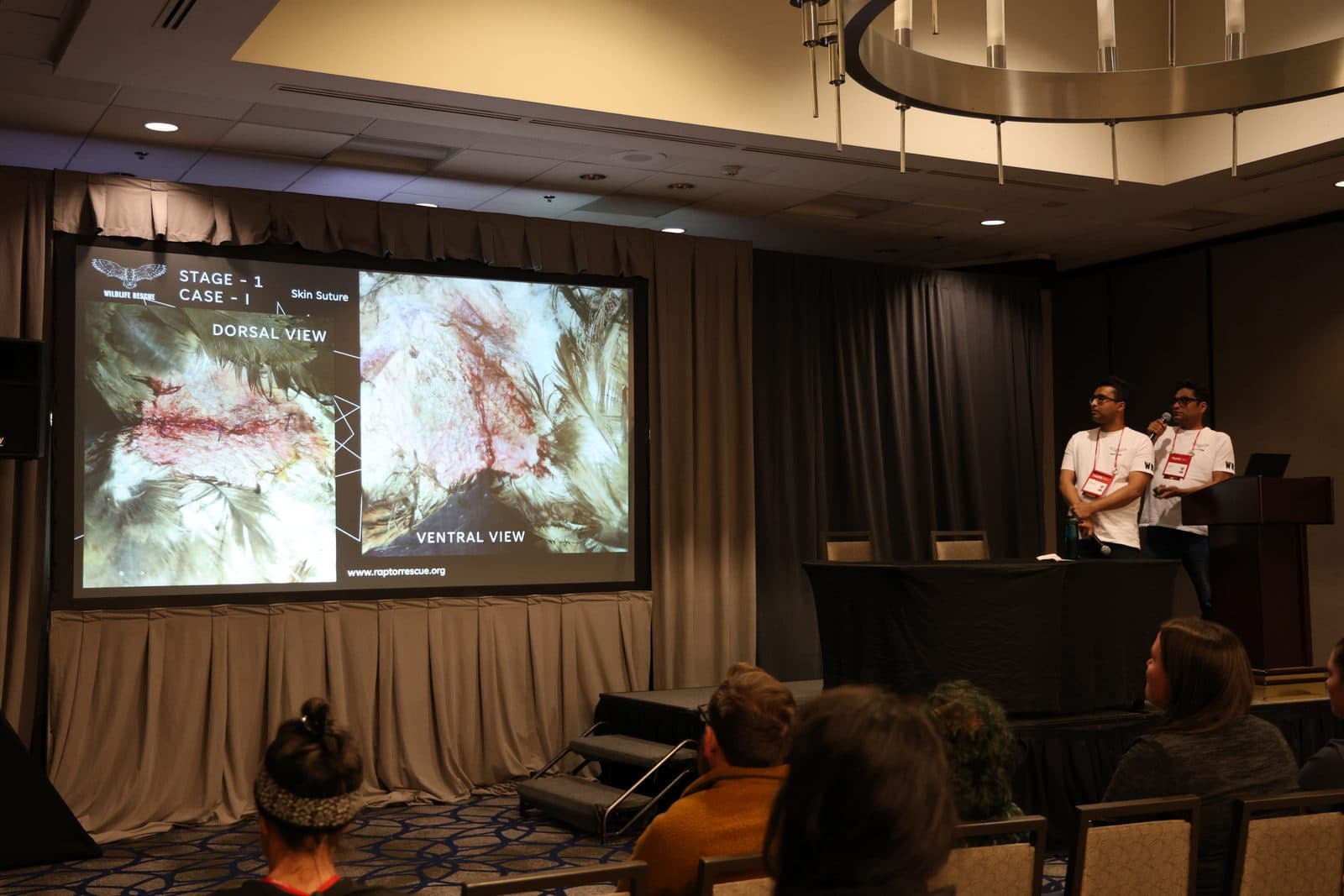
Nadeem Shehzad and Mohammad Saud presenting Stage 1 Case I — dorsal and ventral views of a propatagium skin suture — at the NWRA Symposium 2025
Stage 1 — Case I

Skin Suture

The initial layer of the repair: dorsal and ventral skin sutures that close the laceration and begin the healing cascade. The propatagium — the triangular skin membrane along the leading edge of the wing — is thin, richly vascularised, and critical to flight.
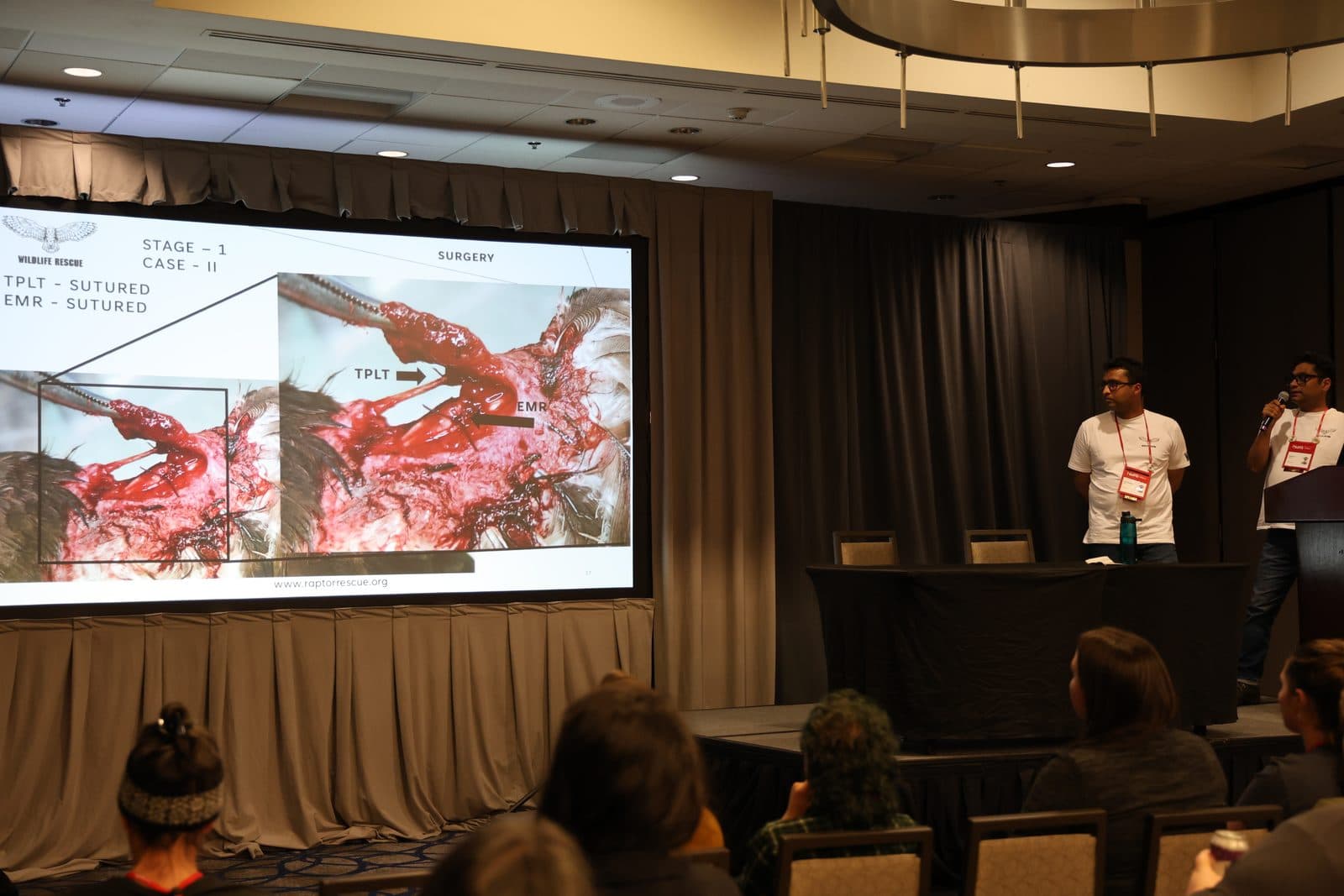
Slide showing TPLT and EMR sutured during Stage 1 Case II propatagium repair surgery
Stage 1 — Case II

TPLT & EMR Sutured

Tensor propatagialis longus tendon (TPLT) and the extensor metacarpi radialis (EMR) — the two functional structures that give the propatagium its rigidity during flight — are individually sutured. Getting this layer right is what determines whether the bird flies again.
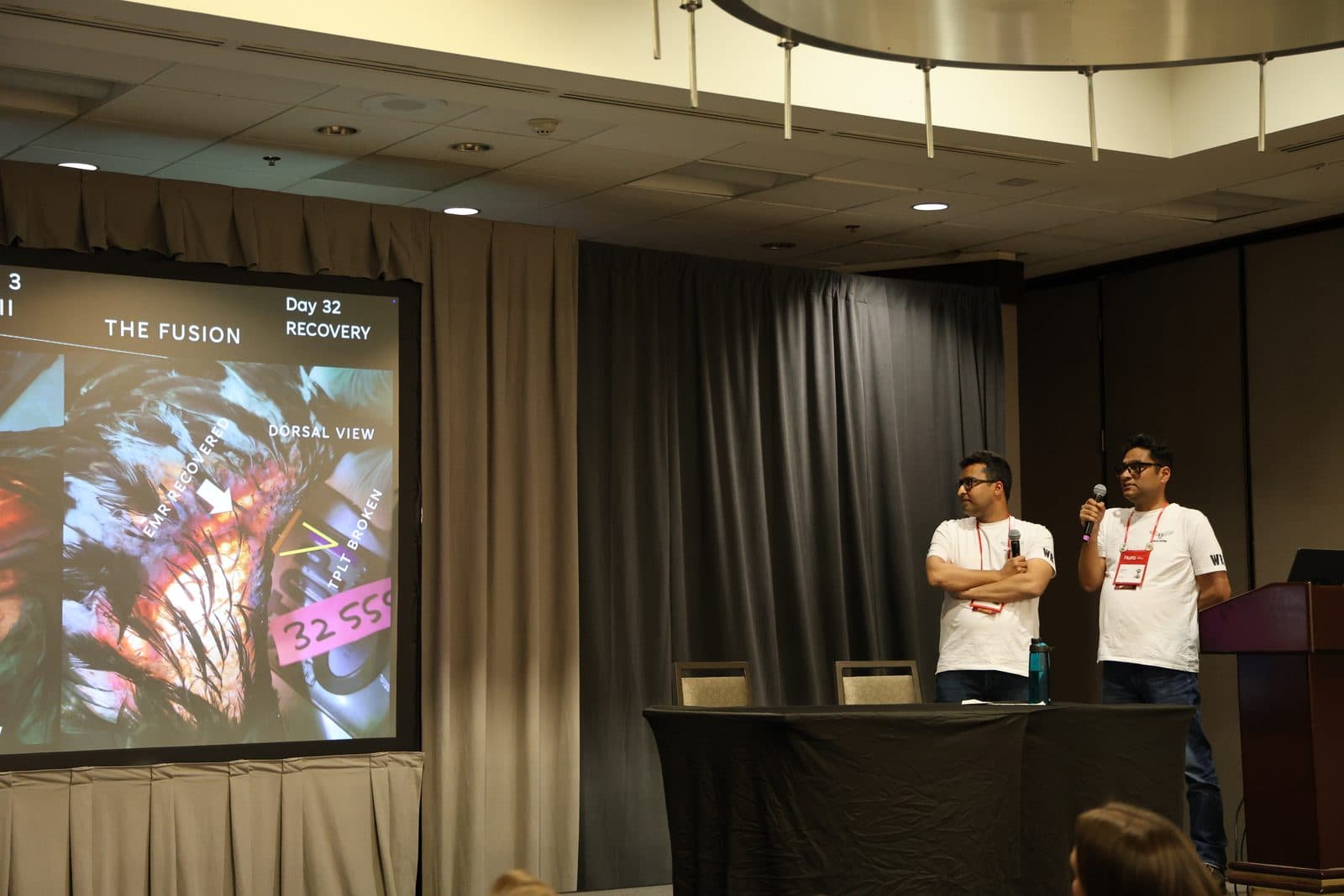
The Fusion Day 32 Recovery slide showing the healed propatagium — dorsal view with measurement tape
Day 32 — Recovery

The Fusion

Post-operative follow-up at day 32. Tissue has integrated, the wound has fused cleanly, and the wing is ready to progress into flight-conditioning in a large aviary before eventual release.

Scenes from the Symposium

At the podium, in the hallway, and on the screen — February 2025.
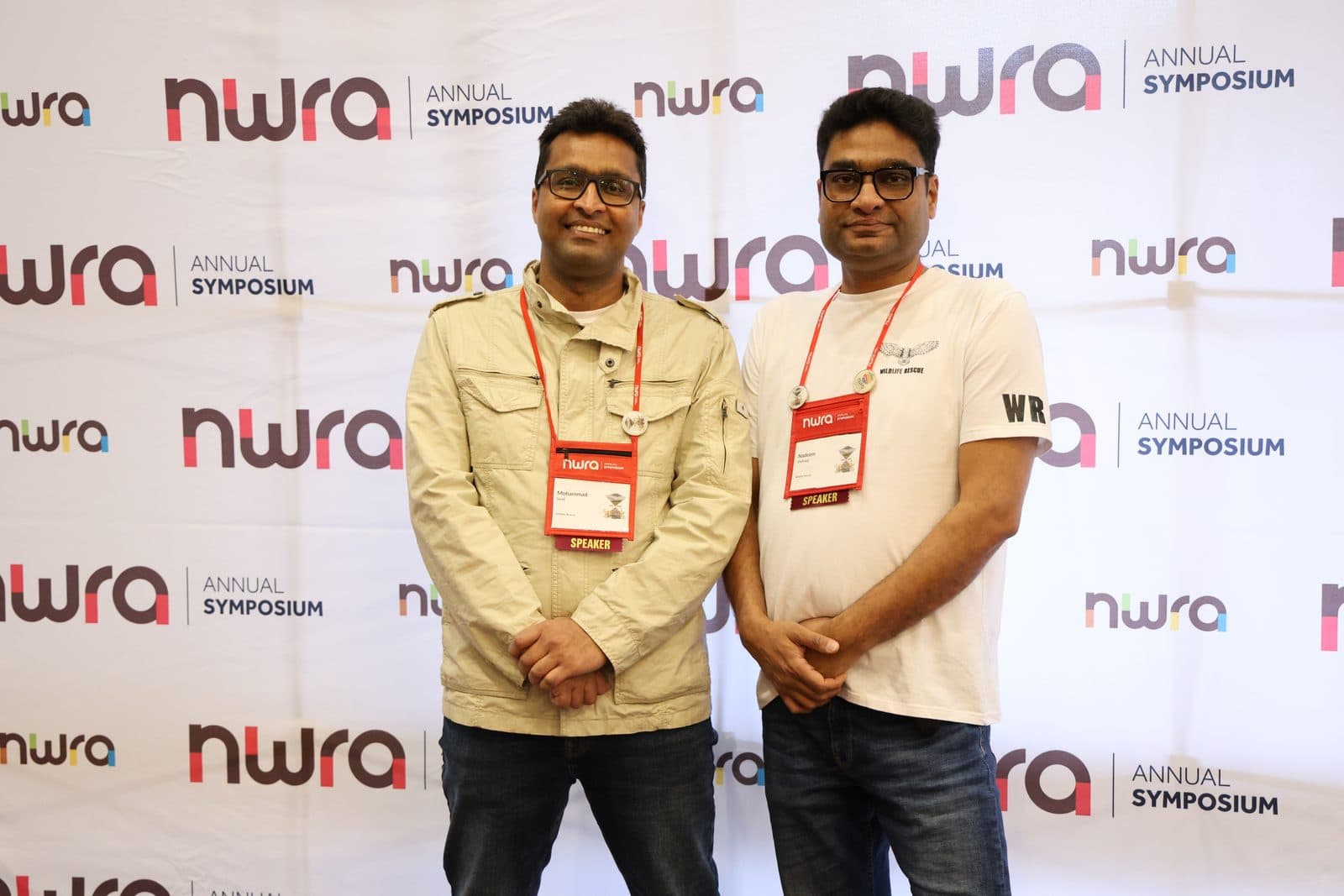
Nadeem Shehzad and Mohammad Saud of Wildlife Rescue wearing Speaker lanyards in front of the NWRA Annual Symposium backdrop, February 2025
Nadeem Shehzad and Mohammad Saud in front of the NWRA Annual Symposium backdrop — both wearing official Speaker lanyards.
Nadeem Shehzad and Mohammad Saud presenting Stage 1 Case I — dorsal and ventral views of a propatagium skin suture — at the NWRA Symposium 2025
Stage 1, Case I — skin suture. Dorsal and ventral views of the propatagium repair shown to the audience.
Slide showing TPLT and EMR sutured during Stage 1 Case II propatagium repair surgery
Stage 1, Case II — TPLT and EMR sutured. Close-up surgical photography demonstrating the layered repair.
The Fusion Day 32 Recovery slide showing the healed propatagium — dorsal view with measurement tape
Day 32 — the fusion. Dorsal view of the healed propatagium, demonstrating tissue integration and successful recovery.
Mohammad Saud and Nadeem Shehzad at the podium during the Q&A session at NWRA Symposium 2025
Taking questions from the audience — international rehabilitators and veterinarians engaging with the technique.
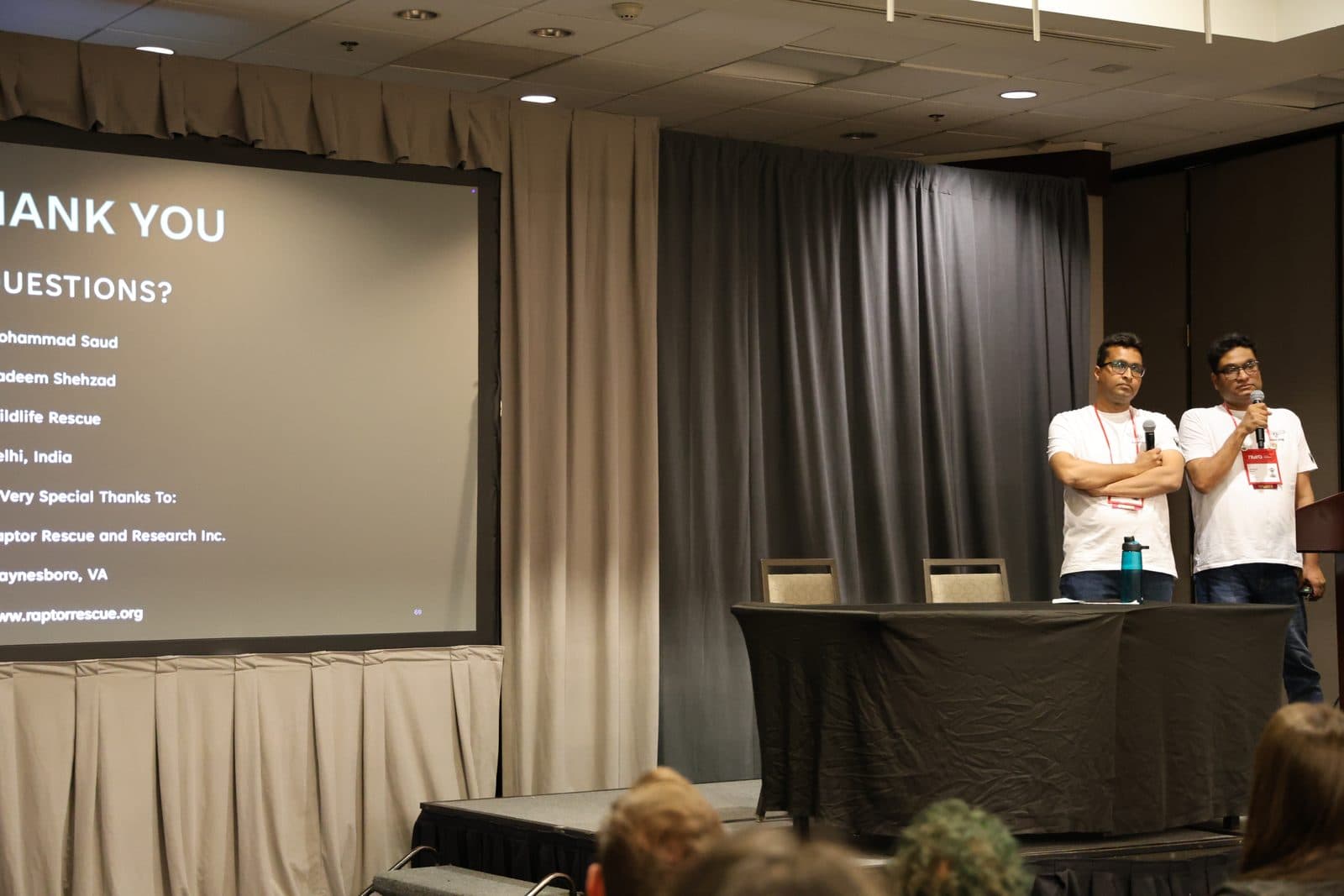
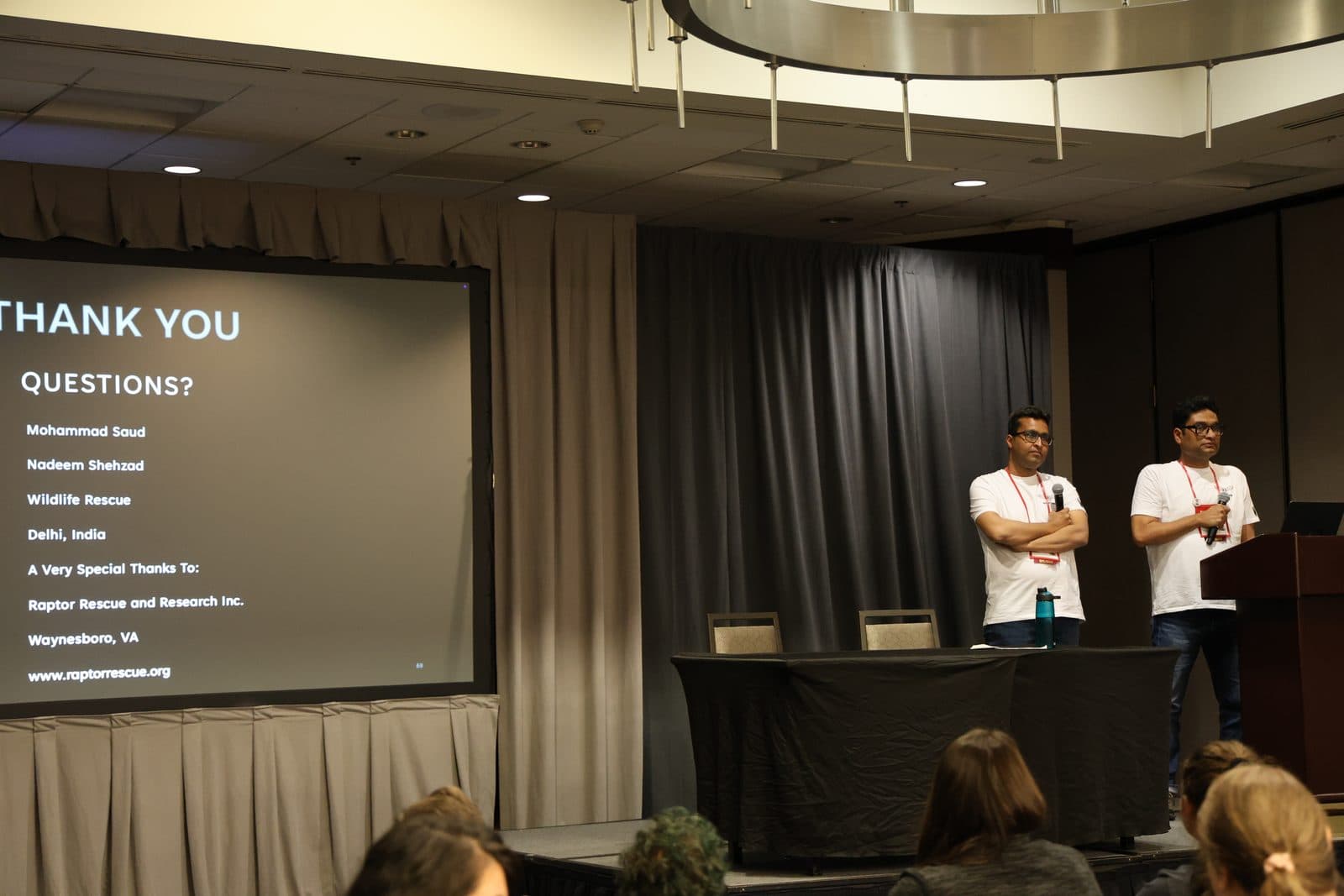
Thank you slide crediting Mohammad Saud, Nadeem Shehzad, Wildlife Rescue Delhi India, and Raptor Rescue and Research Inc., Waynesboro VA
Acknowledgements — Wildlife Rescue (Delhi, India) and Raptor Rescue and Research Inc. (Waynesboro, VA), the U.S. fiscal sponsor that made the trip possible.
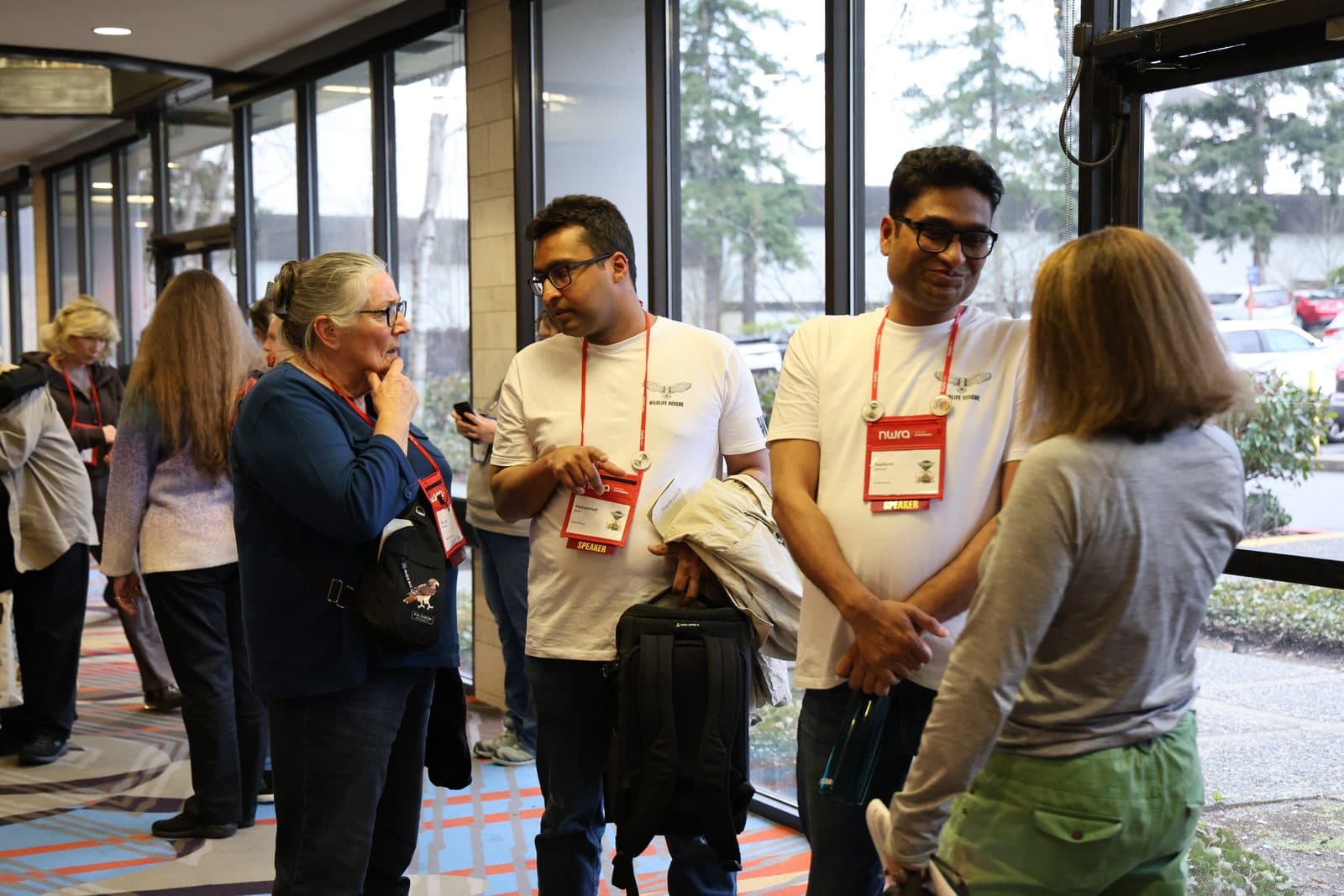
Mohammad Saud and Nadeem Shehzad networking with fellow wildlife rehabilitators at the NWRA Symposium 2025
Meeting fellow rehabilitators in the hallway between sessions — sharing knowledge across continents.

About the NWRA

The National Wildlife Rehabilitators Association is a U.S.-based professional organisation serving wildlife rehabilitators, veterinarians, and researchers worldwide. Its annual symposium is the leading forum for peer-reviewed rehabilitation techniques and research.

nwrawildlife.org

Made Possible By R3

This international presentation was sponsored by Raptor Rescue and Research Inc.— Wildlife Rescue's U.S. fiscal sponsor, a 501(c)(3) nonprofit based in New York. R3 donors make trips like this one — and the knowledge transfer that happens at them — financially possible.

raptorrescueusa.org

Explore

Our Surgical Specialty

The full story of how we developed this technique.

Read more

Explore

Treatments & Equipment

Gas anesthesia, ultrasonic bone cutter, laser wound therapy.

Read more

Explore

Manja & Cut Wounds

Why glass-coated string is Delhi's #1 cause of raptor injury.

Read more

Help Us Share More Techniques with the World

Every international presentation is funded by donors. Help us keep the knowledge moving.

DonateMore Press & Awards