Pioneering avian orthopedic techniques that are saving raptors in Delhi and being received well by rehabilitators worldwide.
Nadeem and Saud are not veterinarians. They taught themselves raptor medicine through decades of hands-on experience, learning from experts worldwide, and relentless research. Their novel surgical technique for repairing wings damaged by kite strings is now received well by rehabilitators and veterinarians globally.
Their work has been presented at the National Wildlife Rehabilitators Association (NWRA) Annual Symposium — first in Los Angeles (2018) and then a refined technique in Seattle (2025).
See our NWRA Symposium 2025 presentationProfessional-grade capabilities that set us apart.
Our signature technique repairs wings severely damaged by manja (glass-coated kite string) that severs skin, muscles, tendons, nerves, and bones. This procedure ensures birds retain full flying ability post-surgery.
Presented at NWRA Annual Symposium 2018 (Los Angeles) and refined technique at NWRA 2025 (Seattle).
On-site X-ray machine enables rapid diagnosis of fractures, dislocations, and internal injuries. Critical for triage decisions on the 11+ birds arriving daily.
Immediate imaging means faster treatment decisions and better outcomes for critically injured birds.
Full isoflurane anesthesia setup for safe surgical procedures. Hematocrit centrifuge for blood analysis and monitoring bird health throughout treatment.
Professional-grade equipment enables complex surgeries successfully.
The medical conditions and injuries we see most often.
Glass-coated kite strings sever skin, muscles, tendons, nerves, and bones. The #1 cause of raptor injuries in Delhi, all year round and especially during Independence Day and Uttarayan festivals.
Baby birds that fall from nests need specialized housing, feeding, and gentle care. The goal is always early release once flight-capable.
Vehicle collisions, window strikes, wall impacts, and wet-wire electrocution during monsoon season cause fractures and internal injuries.
Avian Pox, septicemia, cataracts, bumblefoot, edema, paralysis, and Metabolic Bone Disease require ongoing medical treatment.
Birds trapped in thread, stuck in glue traps, suffering burns, emaciation, dehydration, or contaminated feathers.
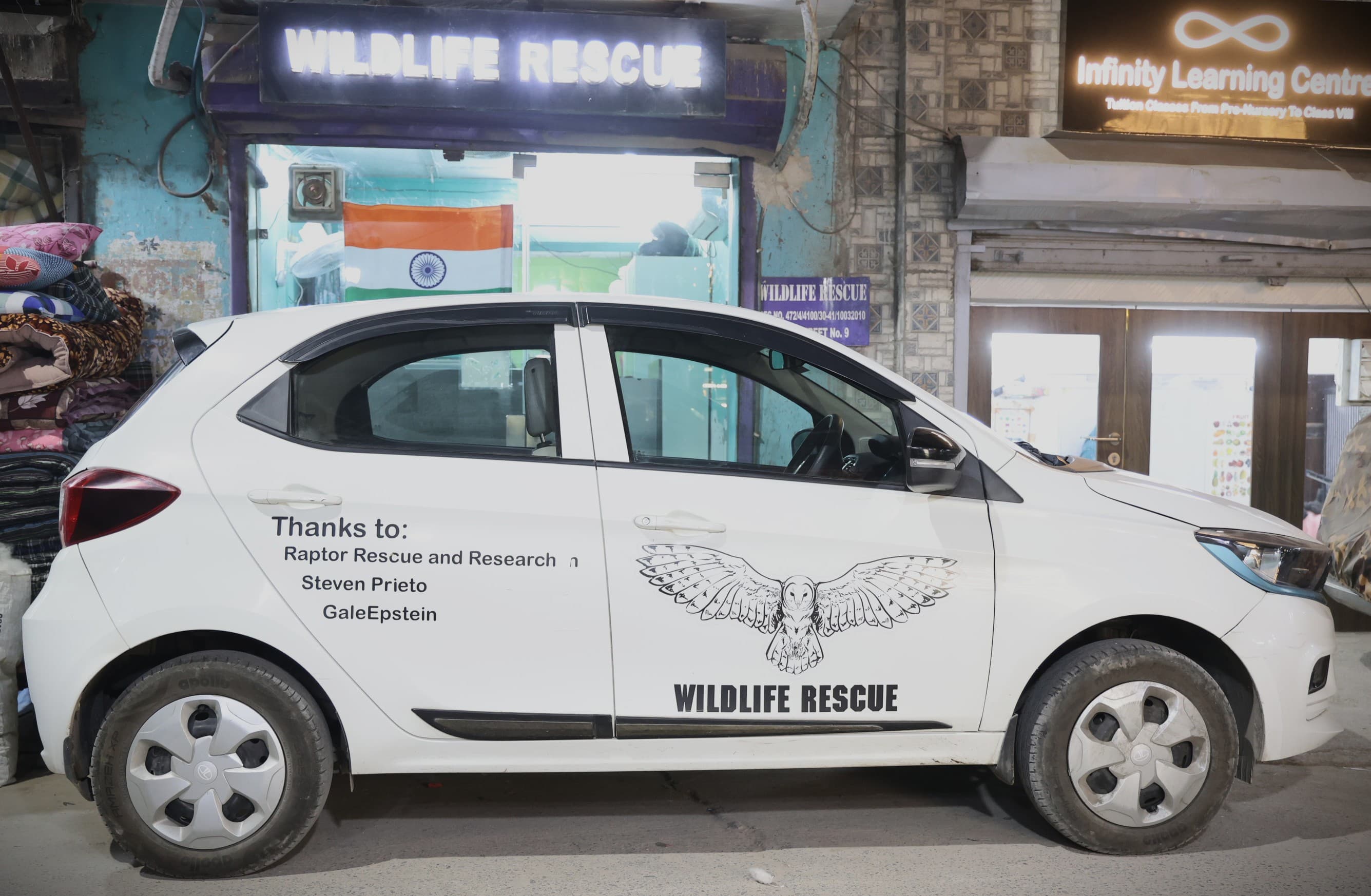
Our Tata EV with Wildlife Rescue branding enables rapid response across Delhi — collecting injured birds from partner hospitals, community hotspots, and citizen rescuers.
Real cases showcasing our techniques in action.
Severe wing damage from glass-coated kite string. Novel surgical technique used to repair severed tendons and muscles. Full flight capability restored after 6 weeks of rehabilitation.
Complex fracture requiring surgical pin placement and careful post-operative care. X-ray imaging guided the procedure. Bird regained flight after 8 weeks.
Severe burns from wet-wire electrocution during monsoon. Required wound management, infection control, and extended rehabilitation period.
Your donation helps maintain and upgrade the medical equipment that saves thousands of birds each year.
