Milvus migrans
The Black Kite is Delhi's most iconic raptor and the core of Wildlife Rescue's mission. Millions live in the city, making Delhi one of the highest concentrations of raptors in any urban area worldwide. Their presence is a barometer of the city's ecological health.
of total intake
treated annually
Urban areas, open country near water, landfills, and markets. Delhi's Old City neighborhoods are a global hotspot for Black Kite density.
Widespread across Europe, Asia, Africa, and Australasia. The Indian subspecies (M. m. govinda) is a year-round resident of the Indian subcontinent.
Opportunistic scavenger and predator. Feeds on fish, rodents, insects, scraps from markets, and waste. Often seen soaring over the Yamuna River and Delhi's landfills.
Body length 47–60 cm, wingspan 120–153 cm, weight 400–900g. Medium-sized raptor with a distinctive forked tail.
Highly social and gregarious. Nests on trees, ledges, and buildings in Delhi. Famous for their spectacular aerial acrobatics — swooping, diving, and kiting on thermal updrafts over the city.
Manja (glass-coated kite string) is the #1 threat — causes severe wing lacerations during festivals. Also electrocution from wet power lines during monsoon, vehicle collisions, poisoning from contaminated food at landfills, and habitat loss from rapid urbanization.
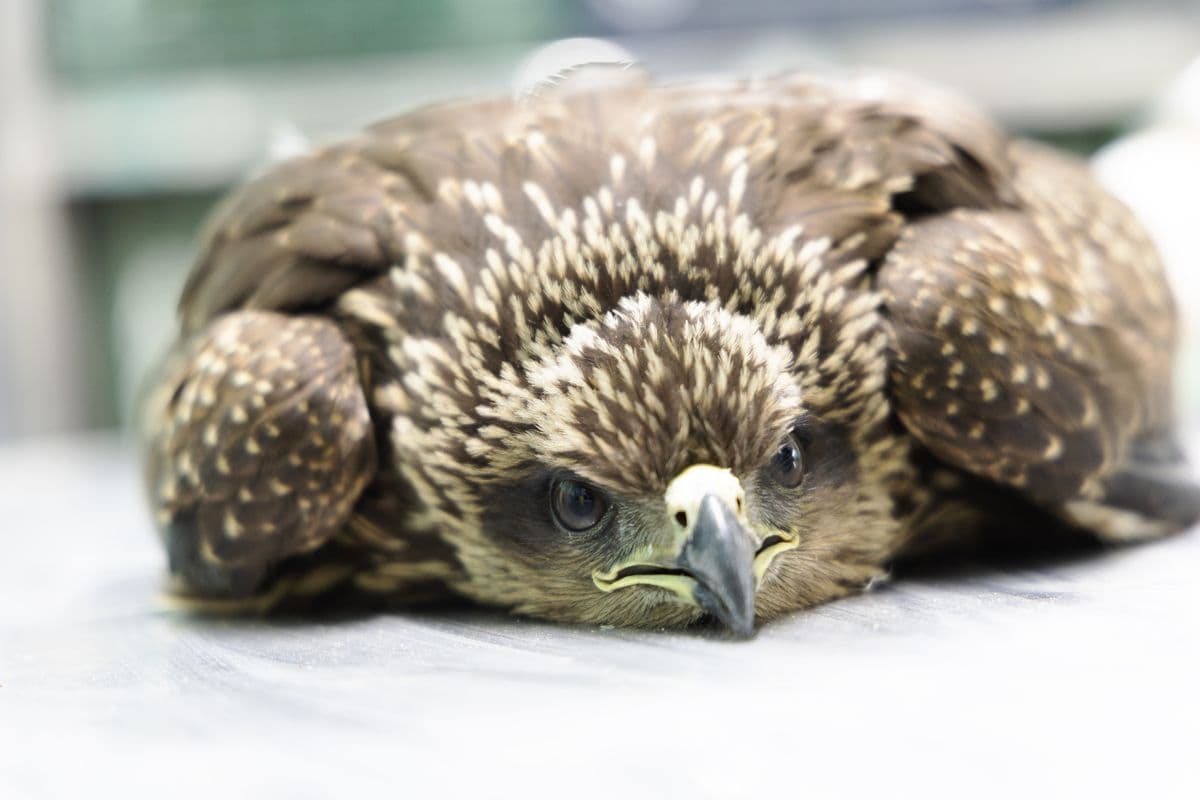
Black Kite resting on clinic examination table — spotted juvenile plumage visible during treatment at Wildlife Rescue
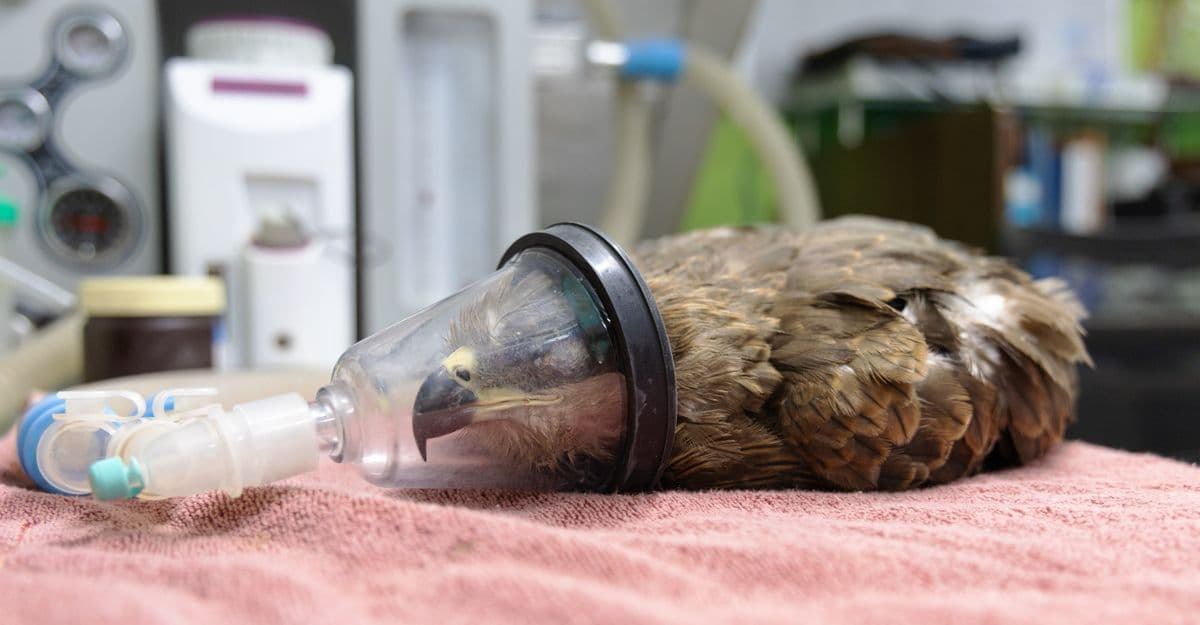
Black Kite under isoflurane gas anesthesia with face mask during surgical procedure at Wildlife Rescue
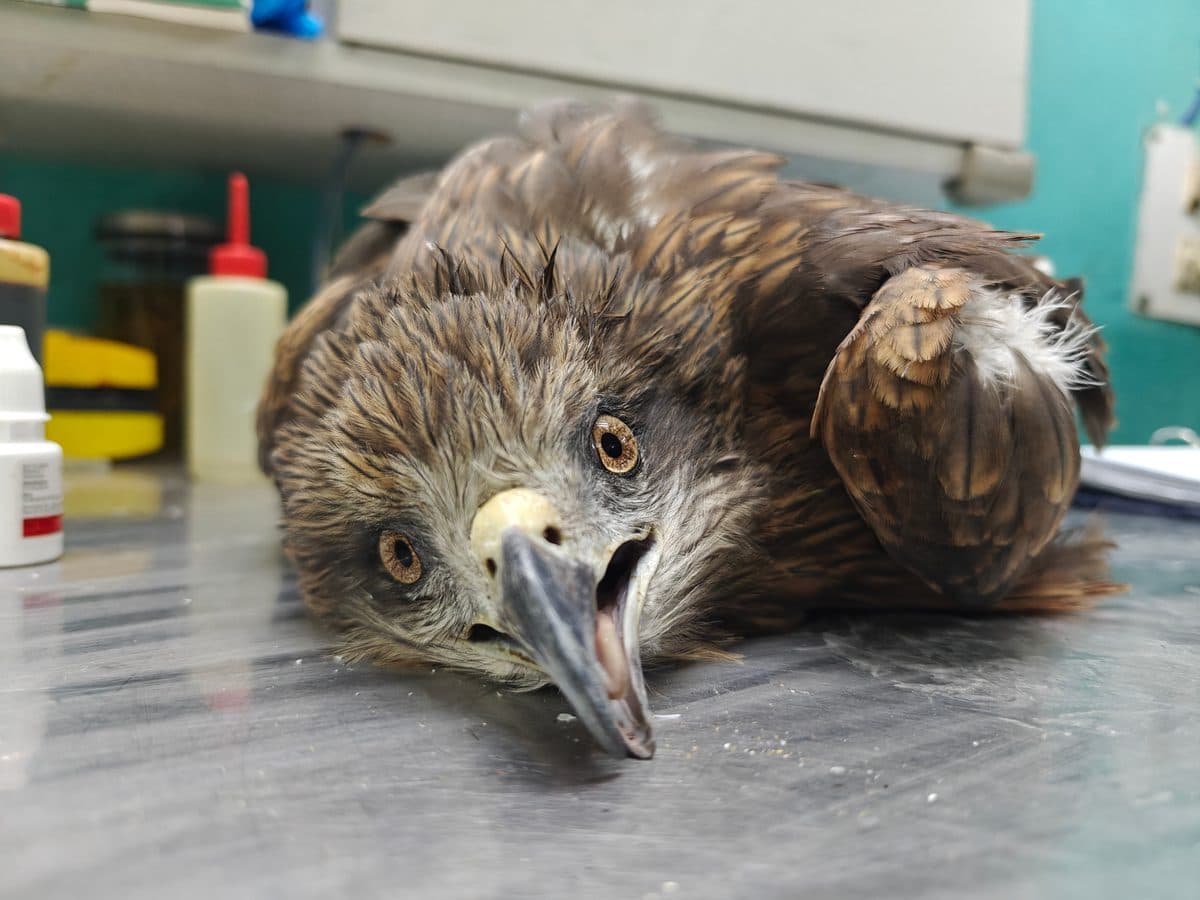
Black Kite in care at Wildlife Rescue clinic
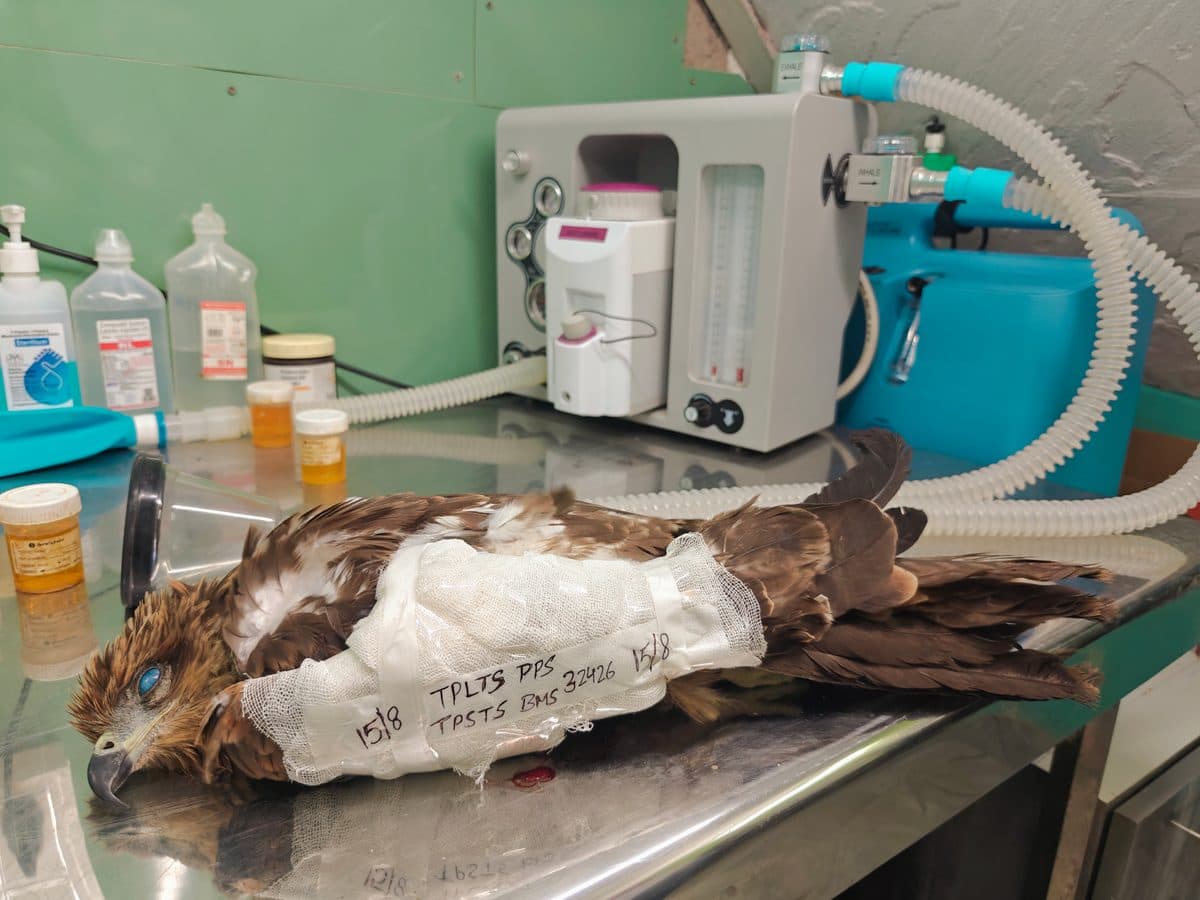
Black Kite recovering from anesthesia after wing repair surgery — wound caused by manja (paper kite flying thread) infection, at Wildlife Rescue
A Black Kite receiving laser wound therapy at Wildlife Rescue — laser treatment accelerates healing of the deep tissue lacerations caused by manja (glass-coated kite string)
A Black Kite being gently dried in a bird dryer after wound cleaning — thermoregulation is critical for avian patients, as wet feathers can cause dangerous hypothermia
Delhi has one of the highest densities of Black Kites in the world — estimated at over 5,000 birds in the city alone. They've lived alongside Delhi's human population for centuries.
Your donation directly funds the rescue and rehabilitation of Black Kites and other birds in Delhi.
