Columba livia
Once a small part of intake, the Blue Rock Pigeon is now Wildlife Rescue's #2 species at 6.3% of cases — reflecting the organization's broadening mission beyond raptors to serve all Delhi's birds in need.
of total intake
treated annually
One of the most successful urban birds worldwide. Found everywhere in Delhi — markets, temples, residential areas, railway stations, and monuments.
Native to southern Europe, North Africa, and South Asia. Feral populations now found worldwide — possibly the most widely distributed bird in the world.
Seeds, grains, food scraps. Highly adaptable feeder that thrives on human food waste and deliberate feeding at temples and public spaces.
Body length 29–37 cm, wingspan 62–72 cm, weight 238–380g. Familiar gray bird with iridescent neck feathers.
Highly social and gregarious. Capable of remarkable navigation — can find their way home over hundreds of kilometers. In Delhi, they congregate at temples and feeding spots in flocks of hundreds.
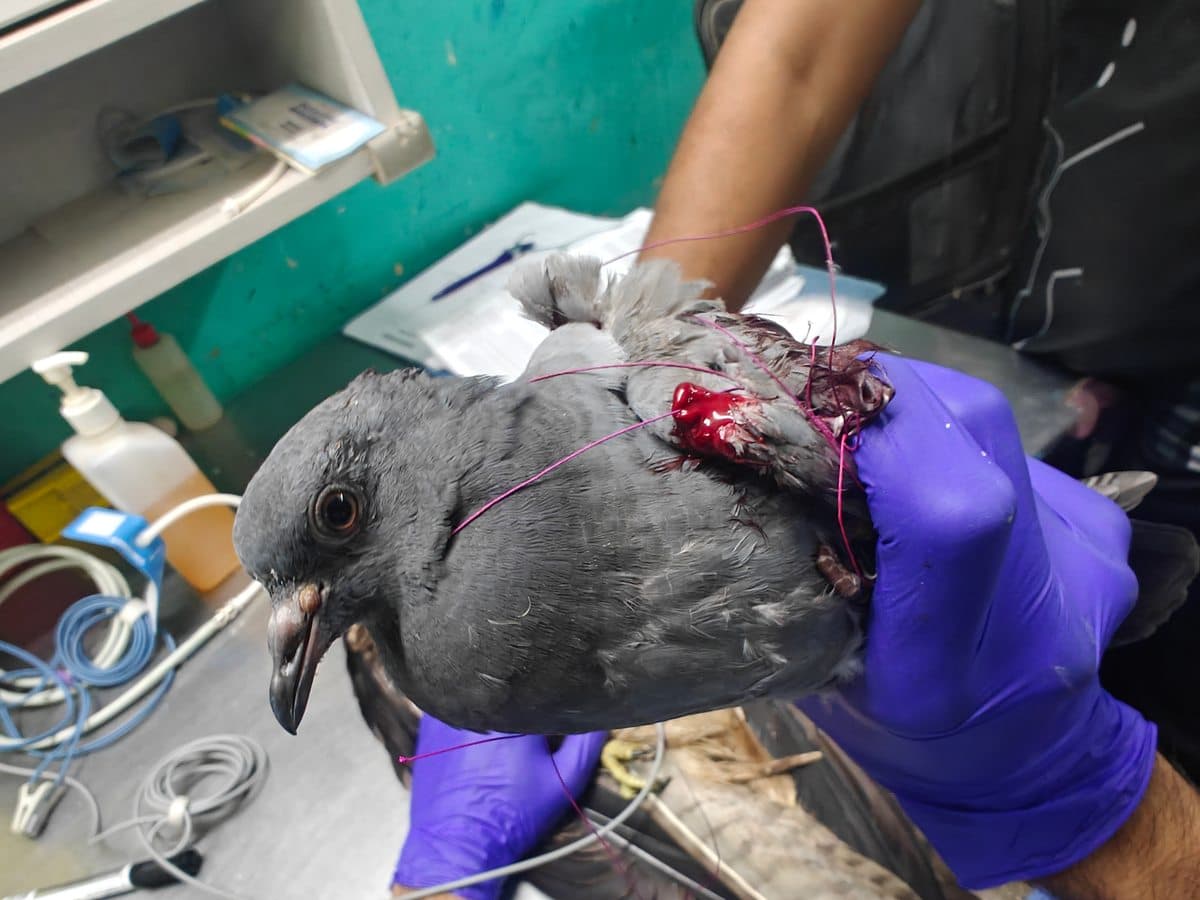
Thread and manja entanglement. Glue traps. Vehicle strikes. Disease outbreaks in dense populations. Poisoning from contaminated grain.
Blue Rock Pigeon at Wildlife Rescue clinic
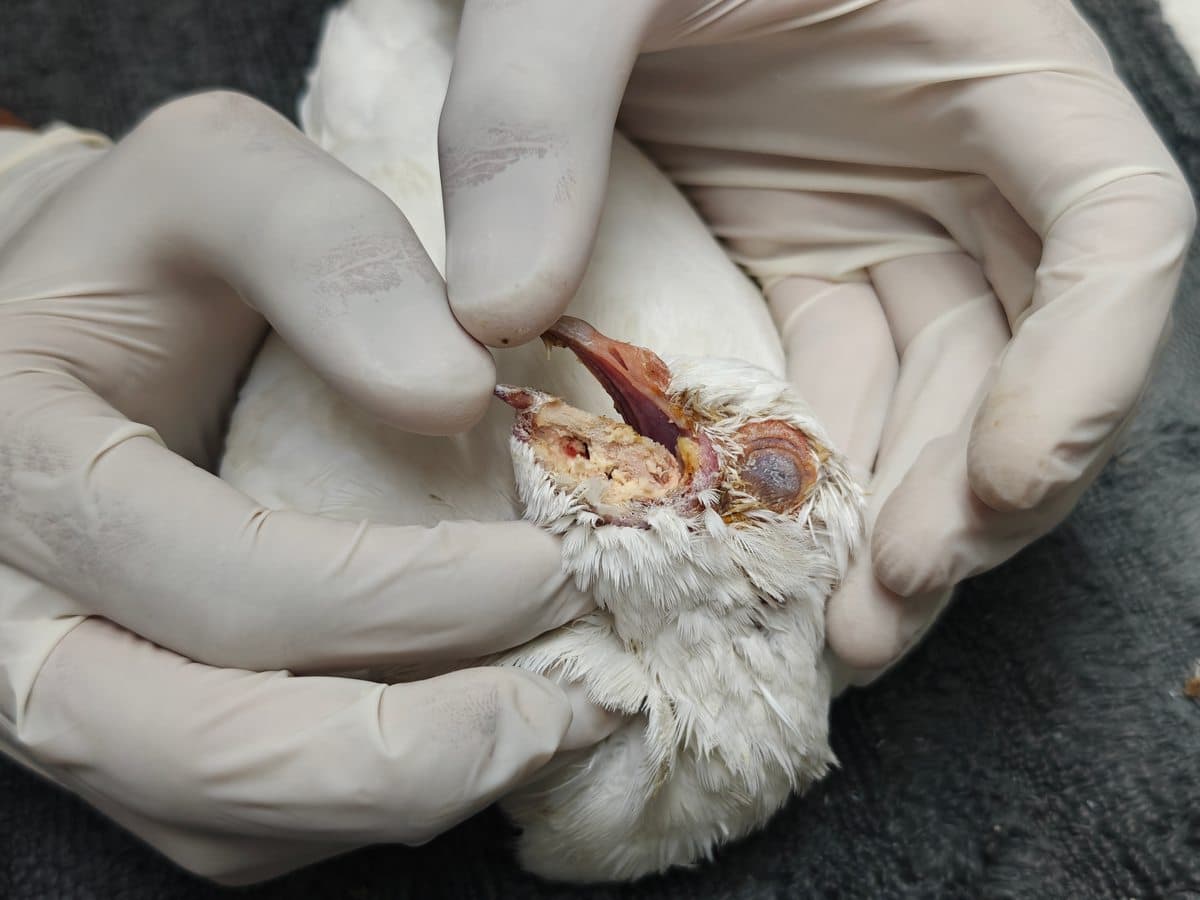
Blue Rock Pigeon during treatment at Wildlife Rescue
Despite being the 'common pigeon,' Blue Rock Pigeons are remarkable navigators. They can detect the Earth's magnetic field, use the sun as a compass, and recognize landmarks from the air — abilities that humans exploited for thousands of years using carrier pigeons.
Your donation directly funds the rescue and rehabilitation of Blue Rock Pigeons and other birds in Delhi.
