Various species
Eagles represent some of the most challenging and rewarding cases at Wildlife Rescue. Their large size demands specialized handling, and many species — like the Steppe Eagle (Endangered) and Greater Spotted Eagle (Vulnerable) — are of global conservation concern. Every eagle saved matters.
of total intake
treated annually
Open country, forest edges, and wetland margins. In Delhi, eagles are found near the Ridge forests, Yamuna floodplain, and on the outskirts where open agricultural land meets urban sprawl.
Delhi hosts both resident and migratory eagle species. Steppe Eagles and Greater Spotted Eagles arrive as winter migrants from Central Asia. Tawny Eagles and Changeable Hawk-Eagles are year-round residents in the wider Delhi NCR region.
Powerful predators at the top of the food chain. Diet varies by species: Steppe Eagles take rodents and small mammals; Greater Spotted Eagles hunt waterbirds and fish; Changeable Hawk-Eagles take birds and small mammals in forest settings.
Large to very large raptors. Steppe Eagle: 62–81 cm, wingspan 165–215 cm, weight 2–4.9 kg. Greater Spotted Eagle: 59–69 cm, wingspan 153–177 cm. These are among the largest birds that Wildlife Rescue treats.
Eagles are apex predators with massive home ranges. Steppe Eagles soar on thermals over open country, scanning for prey. Greater Spotted Eagles prefer wetland edges. Both migratory species face hazards on their long journeys and arrive in Delhi from October onwards.
Electrocution from high-tension power lines — the #1 killer of large raptors. Vehicle collisions on highways. Secondary poisoning from rodenticides and pesticides. Habitat loss as open land is developed. For migratory species, hazards along the Central Asian Flyway (illegal hunting, habitat degradation).
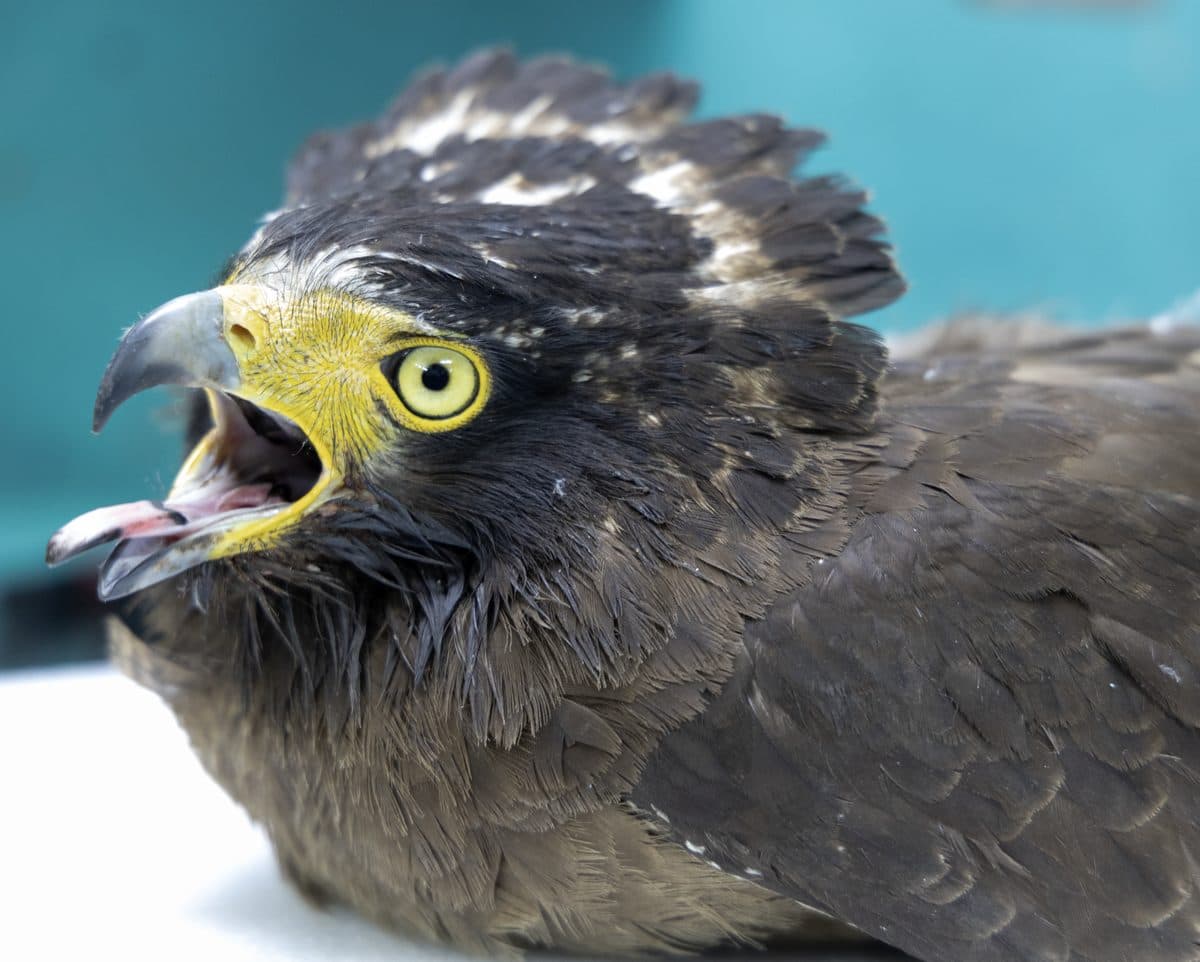
Crested Serpent Eagle close-up showing distinctive yellow face and piercing eye
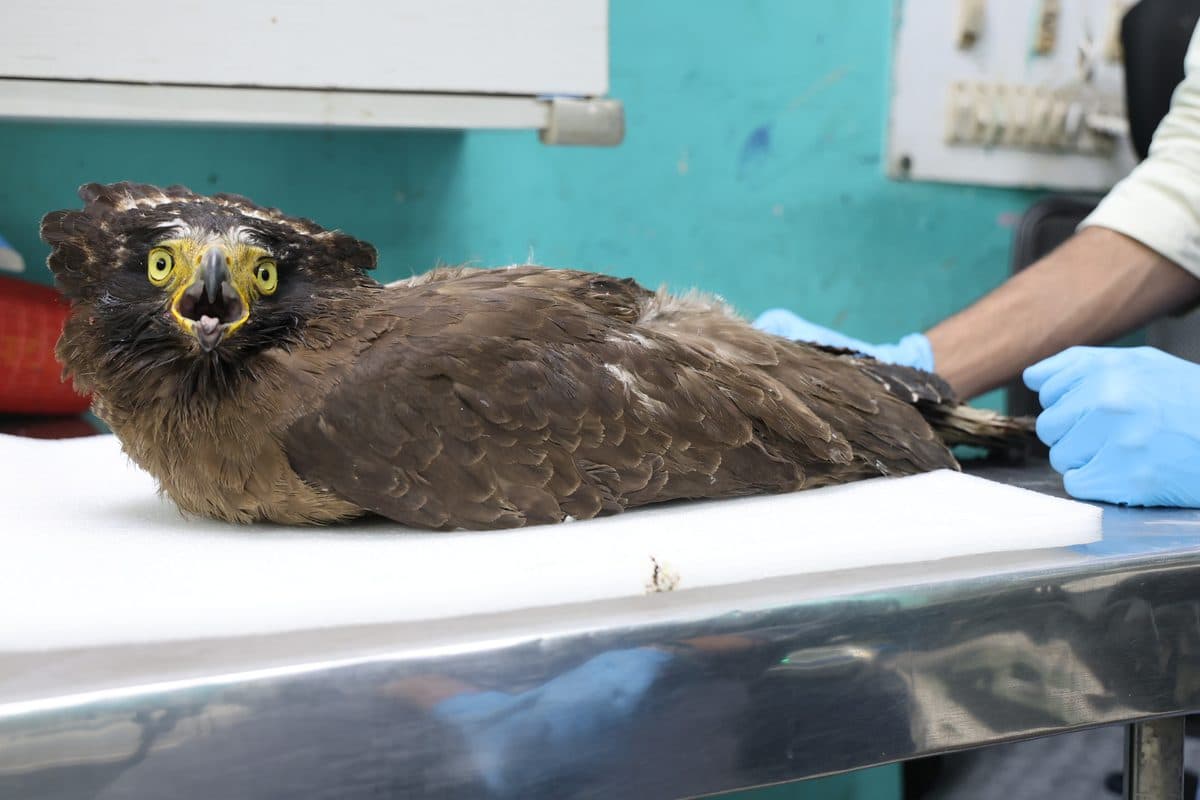
Crested Serpent Eagle on examination table during treatment at Wildlife Rescue
A Crested Serpent Eagle at Wildlife Rescue — these magnificent forest raptors are apex predators of Delhi's Ridge forests, specializing in hunting snakes and reptiles
The Steppe Eagle was recently uplisted to Endangered by IUCN due to dramatic population declines across its Central Asian breeding range. Delhi is one of the key wintering grounds for this species — making Wildlife Rescue's work directly relevant to the species' global survival.
Your donation directly funds the rescue and rehabilitation of Eagless and other birds in Delhi.
