Neophron percnopterus
Every Egyptian Vulture matters. With IUCN Endangered status and populations crashing across South Asia, the individuals that Wildlife Rescue treats represent a critical contribution to species survival. We treat approximately 7 per year — each one is precious.
of total intake
treated annually
Open dry habitats, cliffs, and increasingly urban areas where they scavenge at dumps and slaughterhouses. In Delhi, found near the Yamuna floodplain and on the outskirts.
Southern Europe, Africa, Middle East, and South Asia. Indian population has declined dramatically — estimated 80% decline in 3 generations.
Scavenger feeding on carcasses, waste, and organic refuse. One of the few birds that uses tools — drops stones on ostrich eggs to break them open.
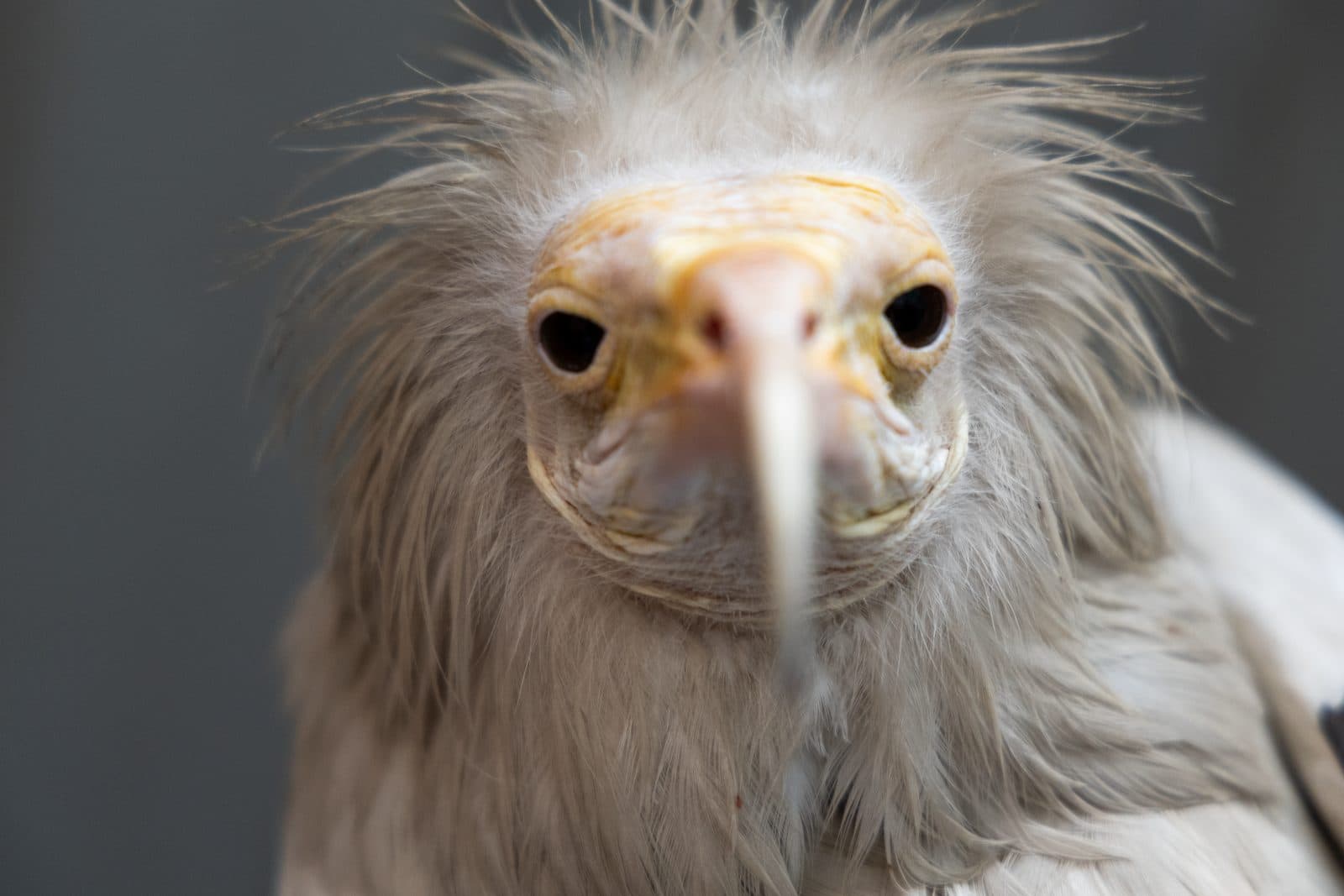
Body length 47–65 cm, wingspan 155–180 cm, weight 1.6–2.4 kg. Adults are distinctive white with black flight feathers and a yellow face.
Often seen soaring on thermals. Relatively tolerant of humans. Nests on cliffs and building ledges. Can live 30+ years.
Diclofenac poisoning (the drug that decimated South Asia's vulture populations). Electrocution from power lines. Lead poisoning from contaminated carcasses. Habitat loss and disturbance at nesting sites.
Egyptian Vulture in care at Wildlife Rescue — an endangered scavenger with distinctive white plumage and yellow face
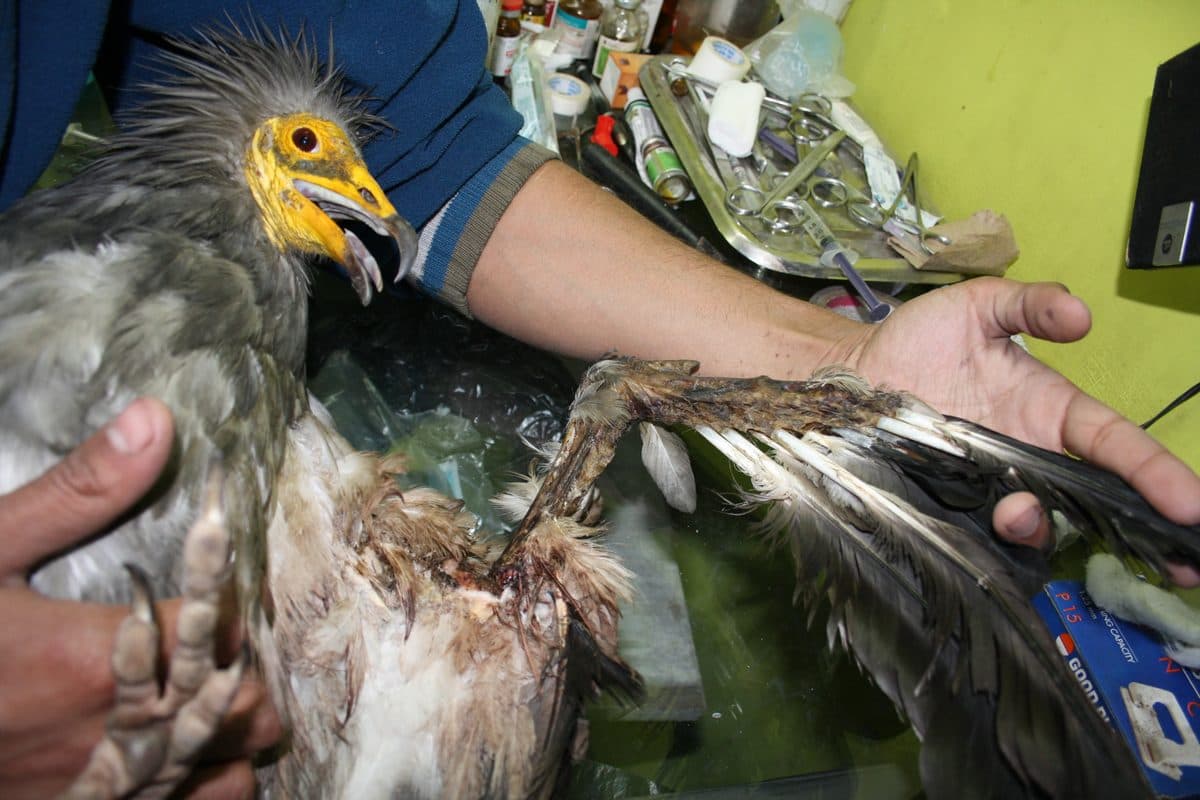
Egyptian Vulture in care at Wildlife Rescue — Sultan, an endangered bird receiving treatment for septicemia
Egyptian Vultures are one of the only birds known to use tools. They pick up stones in their beaks and throw them at ostrich eggs to crack them open — a behavior observed for thousands of years and depicted in ancient Egyptian art.
Your donation directly funds the rescue and rehabilitation of Egyptian Vultures and other birds in Delhi.
