Pernis ptilorhynchus
The Oriental Honey Buzzard is one of Delhi's most fascinating raptors — a specialized predator of bee and wasp nests that most Delhiites have never heard of. Despite looking like a typical raptor, their ecology is utterly unique. Wildlife Rescue treats approximately 10 per year, often birds that have collided with vehicles or power lines.
of total intake
treated annually
Dense deciduous and semi-evergreen forests, wooded hills, and forest edges. In Delhi, found in the Ridge forests (Sanjay Van, Northern Ridge) and wooded areas on the city's southern outskirts. Requires mature forest canopy for nesting.
Widespread across South and Southeast Asia, from the Indian subcontinent to Japan and Indonesia. Northern populations are migratory; Indian birds are largely resident, with some altitudinal movement in the Himalayas.
Highly specialized — feeds primarily on the larvae, pupae, and combs of bees and wasps, raiding their nests in trees and underground. Also takes other insects, small reptiles, frogs, and occasionally fruit. Dense facial feathering protects against bee stings.
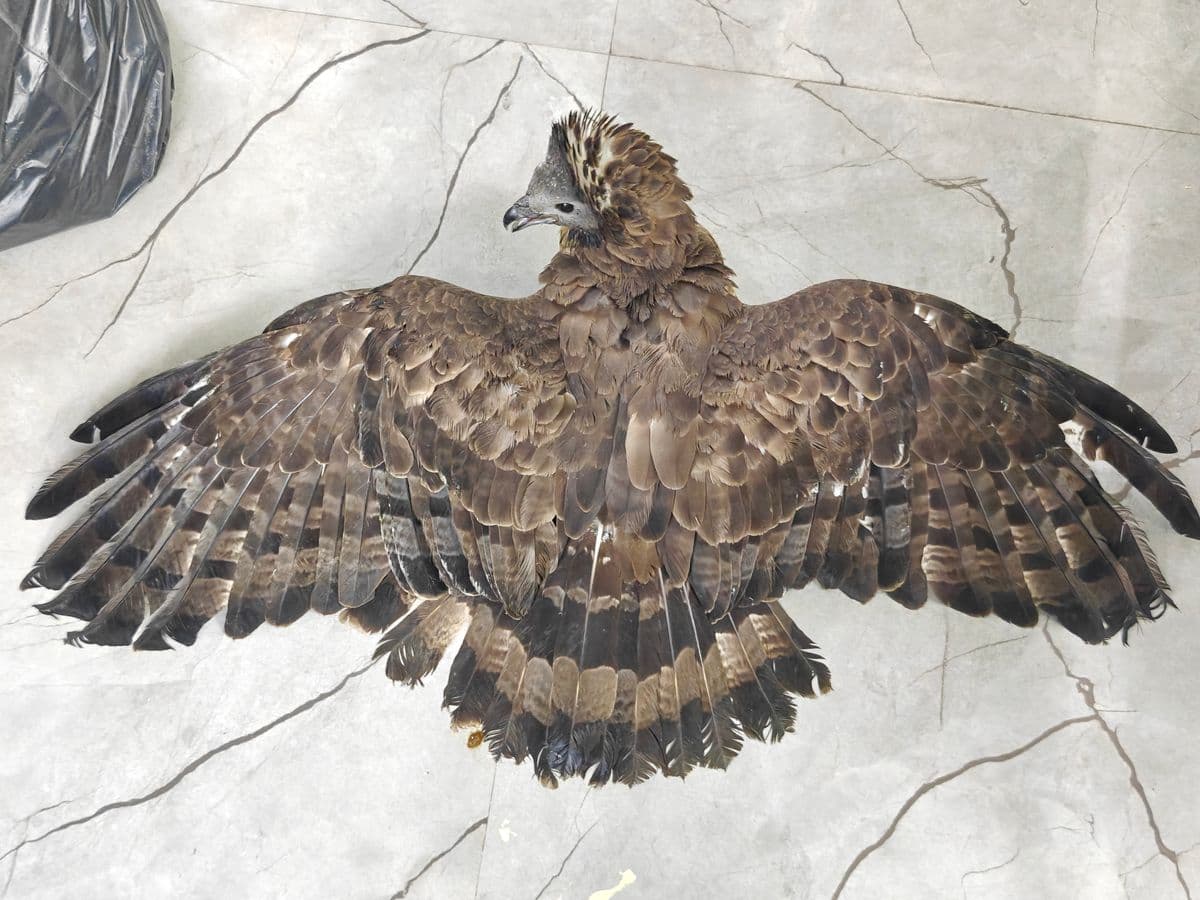
Body length 52–68 cm, wingspan 120–150 cm, weight 750–1,500g. Medium-large raptor with a distinctive small head, long neck, and prominent erectile crest. Variable plumage — from pale to dark morphs.
Patient hunter — will perch quietly near a bee or wasp nest, watching the flight paths of insects before approaching. Uses powerful feet to dig out underground nests. Soars on flat wings with a distinctive pigeon-like head profile. The erectile crest gives it a unique silhouette.
Habitat loss as Delhi's forested areas shrink. Electrocution from power lines at forest edges. Vehicle collisions on roads through wooded areas. Pesticide use reducing insect prey populations. Disturbance at nesting sites from construction and recreation.
Oriental Honey Buzzard with wings fully spread during examination, showing broad wingspan and distinctive crest
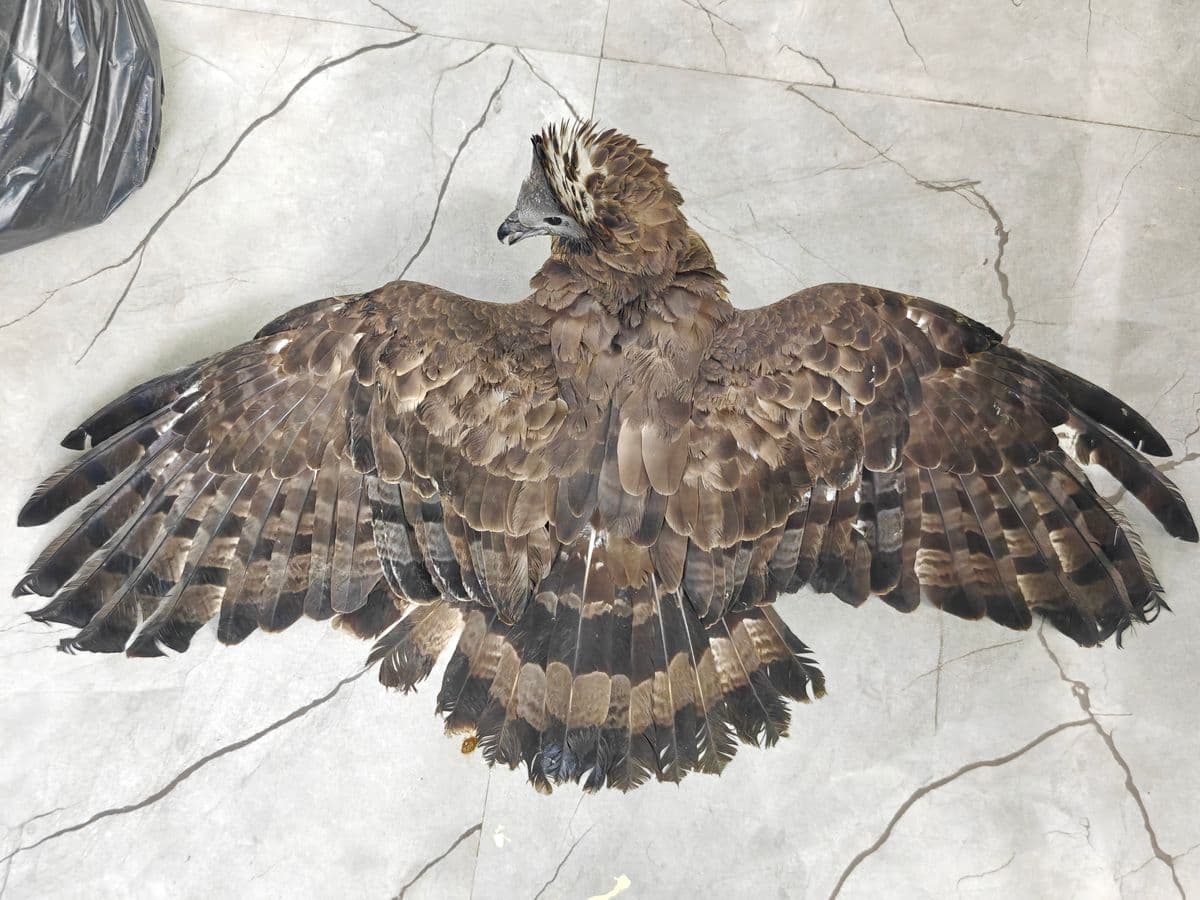
Oriental Honey Buzzard wings-spread view showing detailed feather pattern and barred tail
A juvenile Oriental Honey Buzzard in care at Wildlife Rescue — young buzzards require weeks of specialized feeding and rehabilitation before they can be released
Oriental Honey Buzzards have evolved dense, scale-like feathering on their faces to protect against bee and wasp stings while raiding nests. They also produce a chemical deterrent in their feathers that repels bees — one of the very few birds known to use chemical defense.
Your donation directly funds the rescue and rehabilitation of Oriental Honey Buzzards and other birds in Delhi.
