Falco peregrinus
The Peregrine Falcon is the fastest animal on the planet and one of the most thrilling raptors that Wildlife Rescue treats. Though rare compared to Black Kites, each Peregrine case is remarkable — these are elite predators that have conquered Delhi's skyscraper canyons as their hunting grounds. Wildlife Rescue treats approximately 8 per year.
of total intake
treated annually
Cliffs, tall buildings, bridges, and open country. In Delhi, Peregrine Falcons have adapted to urban life, nesting on high-rise buildings, power plant chimneys, and large monuments — using them as artificial cliff faces.
The most widespread raptor on Earth — found on every continent except Antarctica. The Indian subspecies (F. p. peregrinator, the Shaheen Falcon) is a resident breeder, while northern subspecies (F. p. calidus) migrate through Delhi in winter from Arctic and Central Asian breeding grounds.
Specialist bird hunter. Catches prey almost exclusively in flight — pigeons, doves, parakeets, and smaller birds. Hunts using spectacular high-speed stoops (dives), striking prey with clenched talons at tremendous speed.
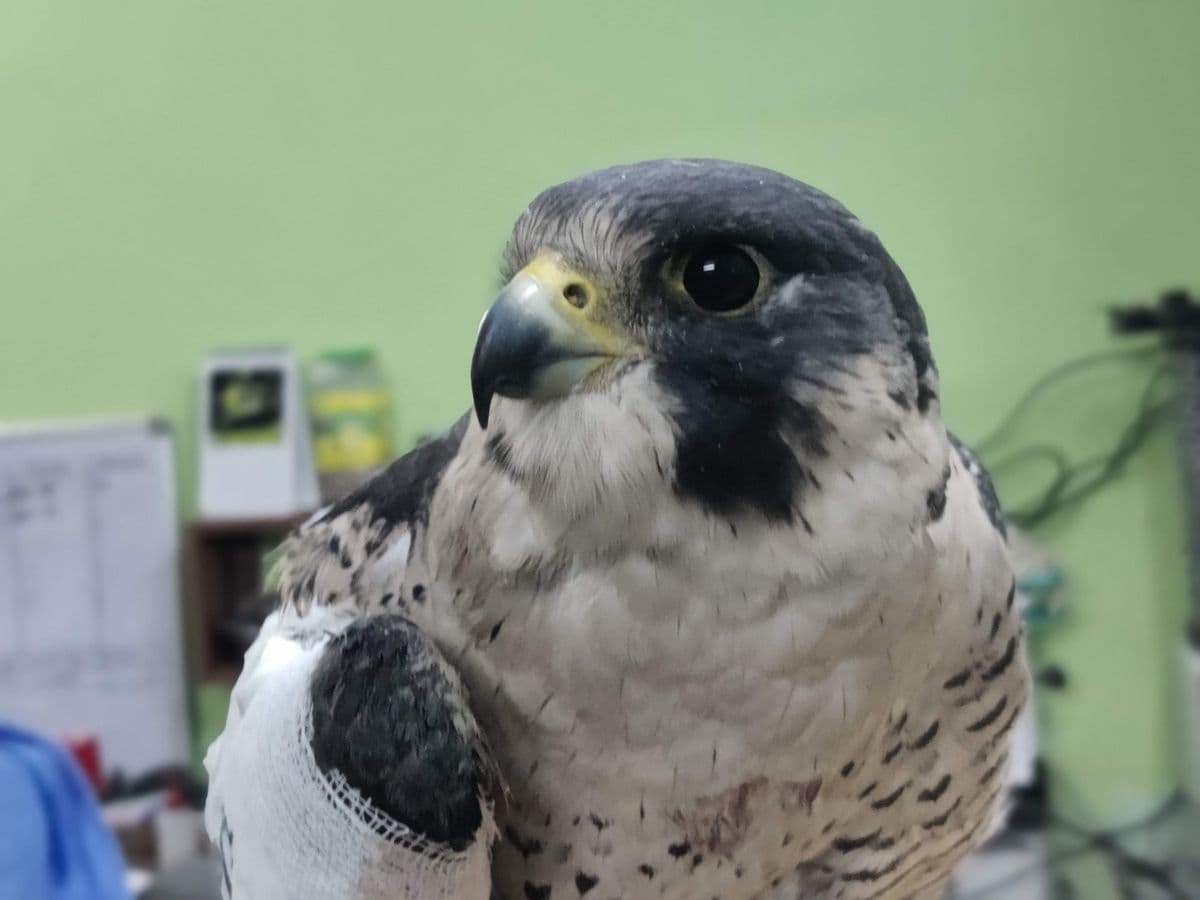
Body length 34–50 cm, wingspan 74–120 cm, weight 330–1,500g. Females significantly larger than males. Compact, powerful build with a distinctive dark 'moustache' stripe on the face, slate-grey upperparts, and barred underparts.
The fastest animal on Earth — recorded at speeds exceeding 390 km/h (242 mph) in a hunting stoop. Territorial and aggressive, will defend nesting sites against much larger birds including eagles. In Delhi, hunts at dawn and dusk from high perches on buildings.
Building collisions during high-speed hunting pursuits through the urban landscape. Manja (glass-coated kite string) entanglement — particularly dangerous for a high-speed flier. Electrocution from power lines. Secondary poisoning from eating pigeons that have ingested rodenticides. Disturbance at urban nesting sites during construction.
Peregrine Falcon portrait at Wildlife Rescue clinic showing dark moustachial stripe and bandaged wing
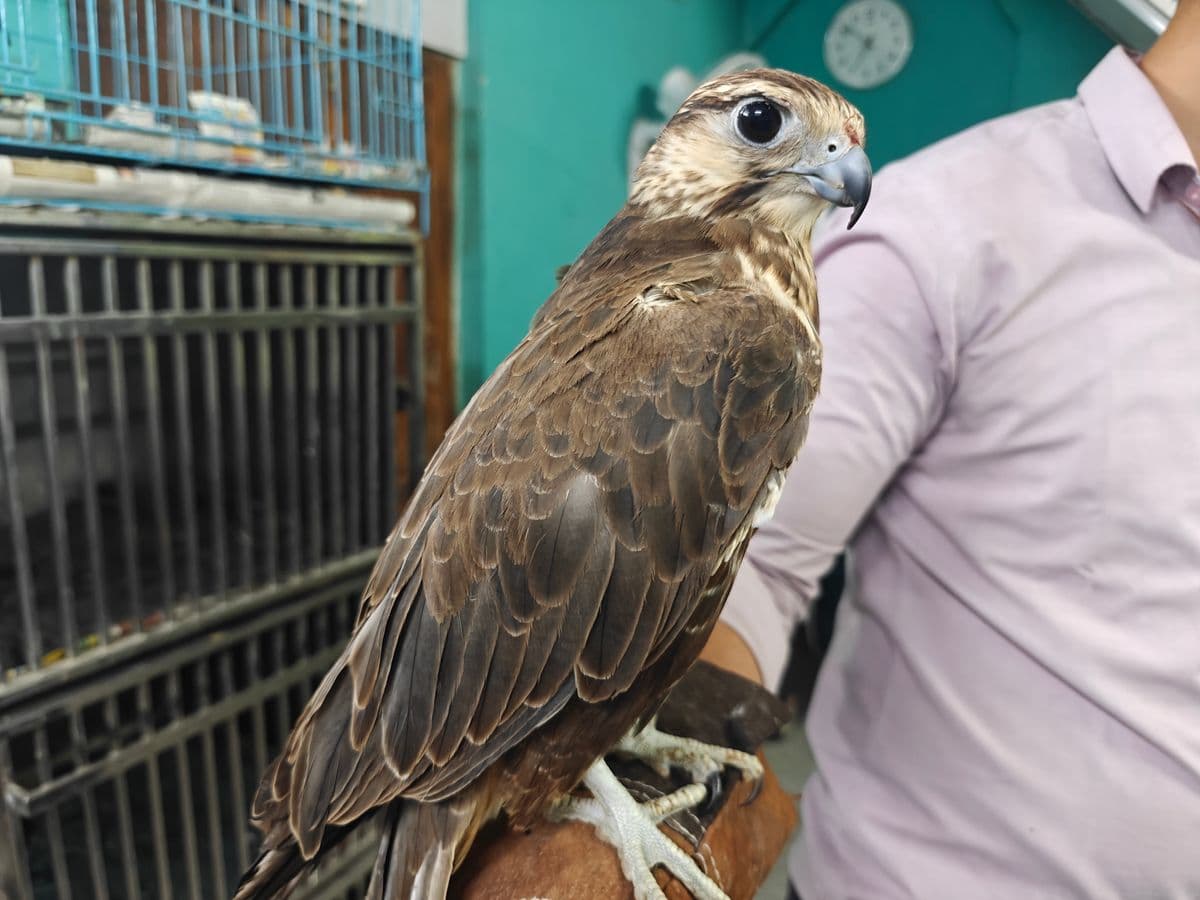
Falcon held by handler during examination at Wildlife Rescue, showing brown plumage and alert expression
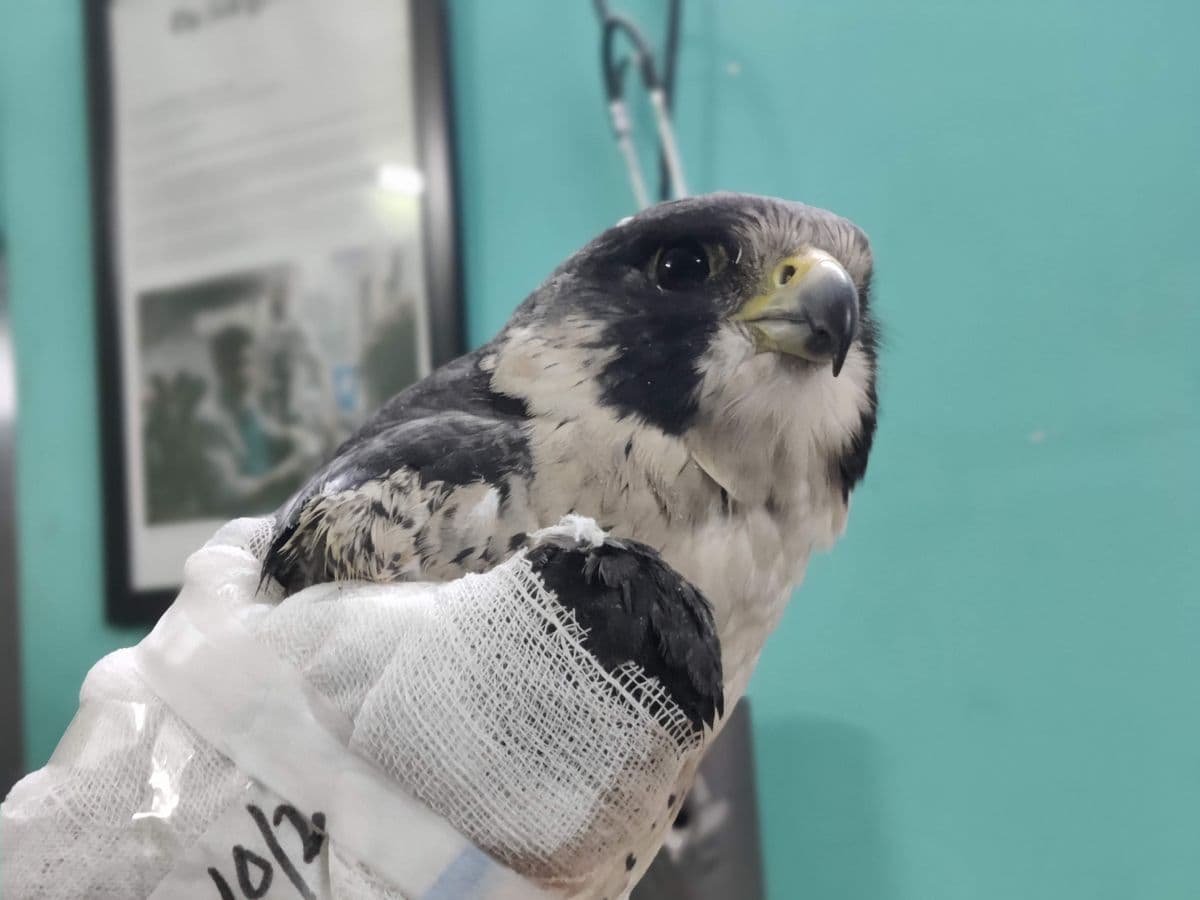
Peregrine Falcon with body bandage during treatment, showing slate-grey and white plumage
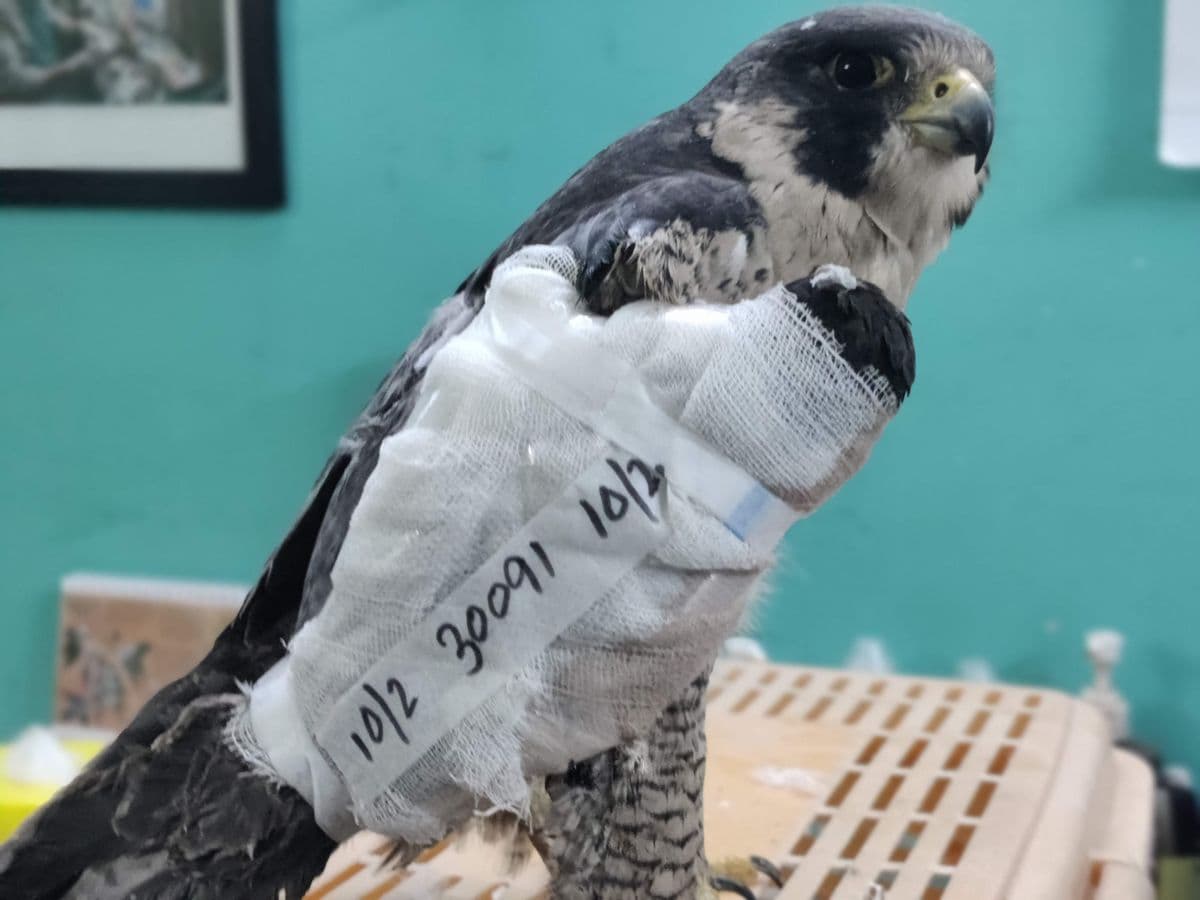
Peregrine Falcon in recovery with treatment bandage and case notes, perched at Wildlife Rescue clinic
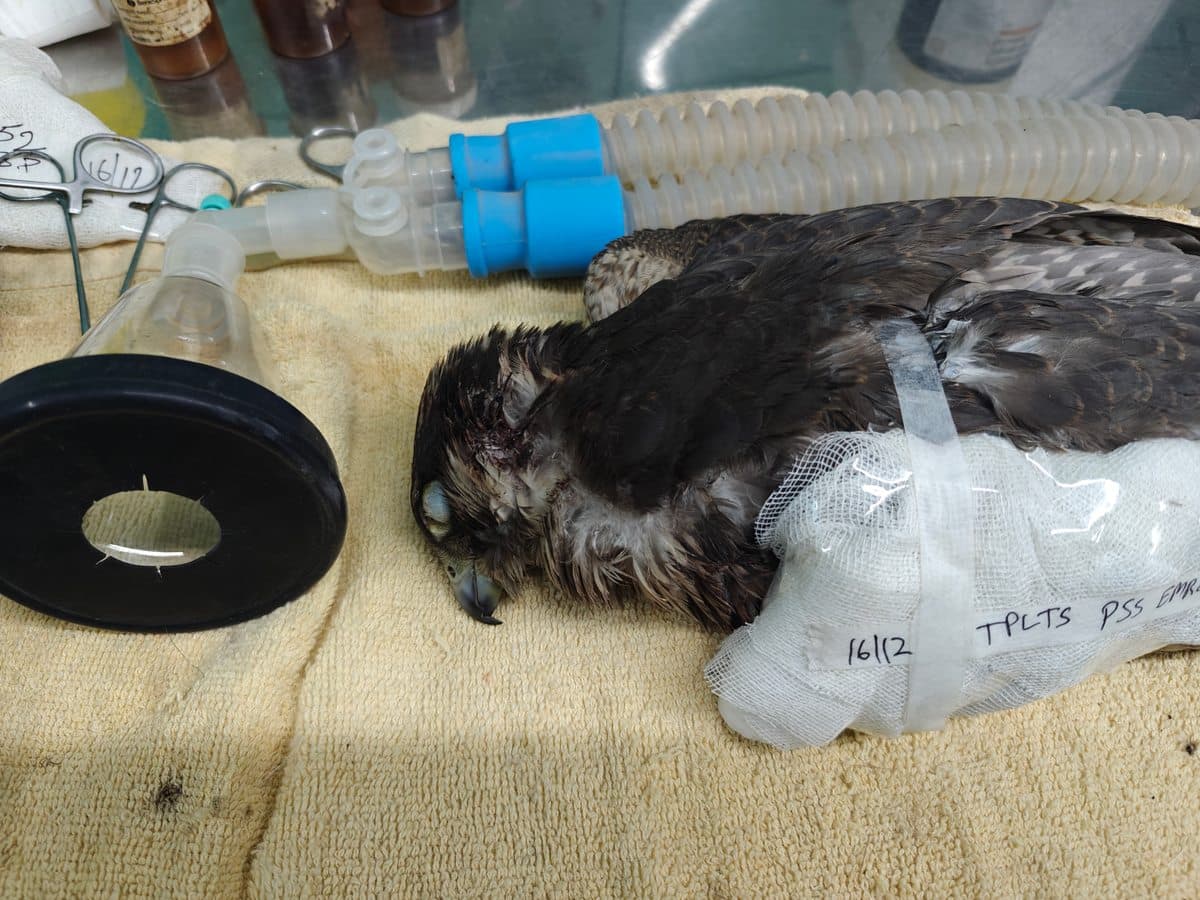
Peregrine Falcon at Wildlife Rescue clinic
During a hunting stoop, a Peregrine Falcon can exceed 390 km/h (242 mph) — faster than a Formula 1 car. To breathe at these speeds, they have special bony tubercles in their nostrils that redirect airflow, preventing their lungs from being damaged by the air pressure. Fighter jet engine intake designs have been inspired by this adaptation.
Your donation directly funds the rescue and rehabilitation of Peregrine Falcons and other birds in Delhi.
