Accipiter badius
The Shikra is Delhi's most common small raptor — a compact, fierce predator perfectly adapted to urban life. Despite their small size, they're formidable hunters. Wildlife Rescue treats approximately 60 Shikras per year.
of total intake
treated annually
Wooded areas, gardens, parks, and urban green spaces. Well-adapted to city life in Delhi — found in Lodhi Gardens, Sanjay Van, and residential areas with mature trees.
Widespread across sub-Saharan Africa and South/Southeast Asia. Common resident across the Indian subcontinent.
Active predator hunting small birds, lizards, frogs, and large insects. Hunts from a perch, making short fast dashes to catch prey — a classic accipiter hunting style.
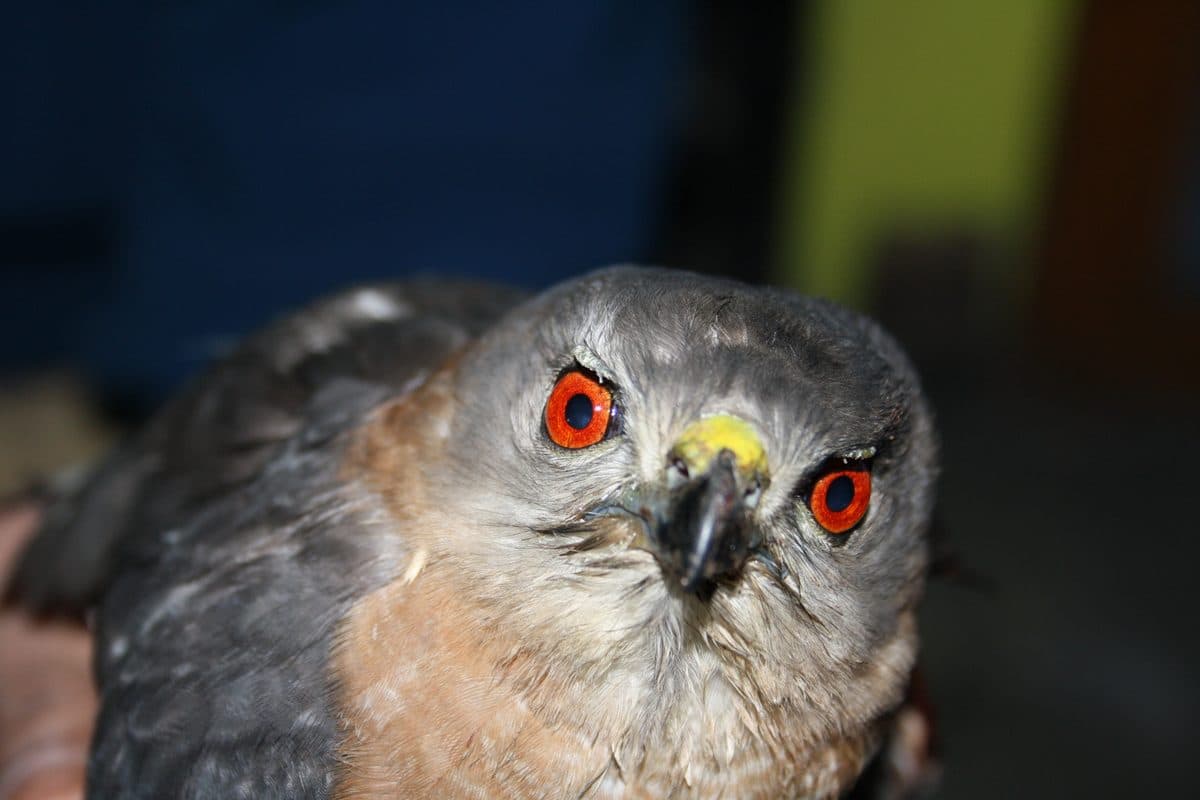
Body length 26–30 cm, wingspan 40–55 cm, weight 75–160g. Small but fierce raptor with bright red-orange eyes.
Bold and aggressive despite small size. Will defend territory against much larger birds. Fast, agile flier capable of navigating dense vegetation at speed.
Window strikes in modern buildings. Glue traps meant for rodents. Pesticide poisoning from eating contaminated insects and lizards. Nest disturbance during tree pruning.
Shikra close-up showing distinctive bright red-orange eyes and grey plumage
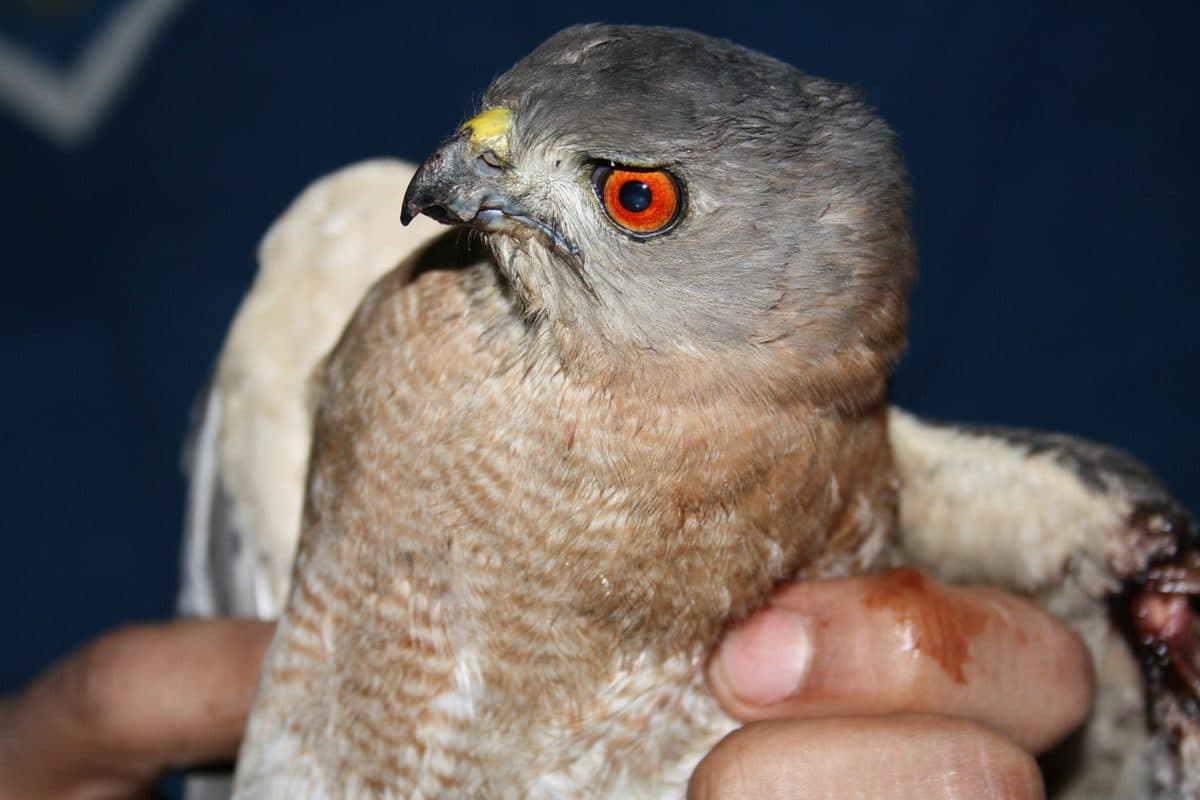
Shikra being gently held during examination, showing barred breast feathers and orange eyes
The name 'Shikra' comes from the Hindi word 'shikari' (hunter). They were historically used in falconry across India and the Middle East — prized for their speed and agility.
Your donation directly funds the rescue and rehabilitation of Shikras and other birds in Delhi.
