Aquila nipalensis
The Steppe Eagle is one of the most conservation-critical species that Wildlife Rescue treats. Uplisted to Endangered by IUCN in 2015 due to a 50–79% population decline over three generations, every individual matters. Delhi is a key wintering ground, and Wildlife Rescue's treatment of ~12 Steppe Eagles per year is a direct contribution to the survival of this magnificent species.
of total intake
treated annually
Open grasslands, steppe, semi-desert, and agricultural plains. In Delhi, wintering birds are found near the Yamuna floodplain, landfill sites, and open agricultural land on the city's outskirts.
Breeds across the vast steppes of Central Asia — from southern Russia and Kazakhstan through Mongolia to northern China. Migrates south in winter to the Indian subcontinent, the Middle East, and East Africa via the Central Asian Flyway.
Opportunistic predator and scavenger. On breeding grounds, feeds primarily on ground squirrels and other rodents. In India during winter, scavenges at carcass dumps, landfills, and slaughterhouse waste alongside Black Kites and vultures.
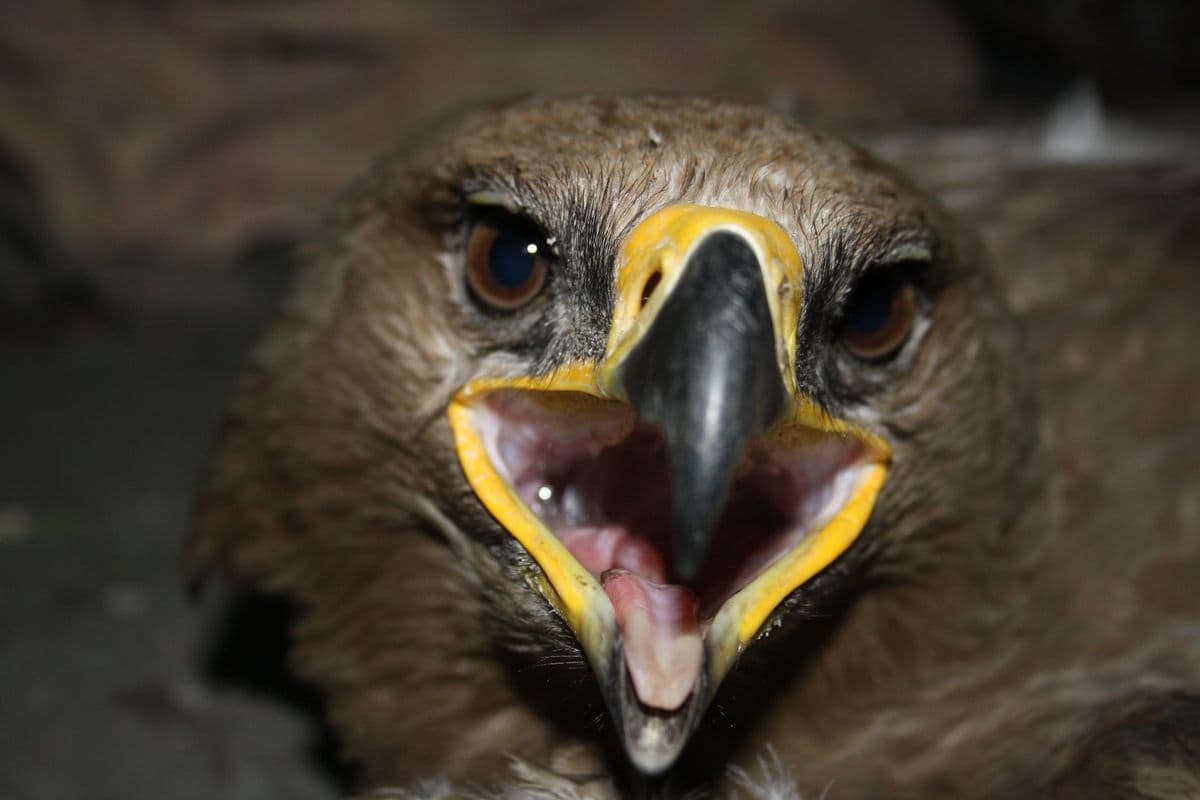
Body length 62–81 cm, wingspan 165–215 cm, weight 2–4.9 kg. One of the largest raptors treated at Wildlife Rescue — a massive, powerful eagle with a distinctive wide yellow gape that extends behind the eye.
Long-distance migrant — travels up to 10,000 km between breeding and wintering grounds. Soars on broad wings over open terrain. Less aggressive than some eagles; often feeds alongside vultures and kites at carcass sites. Arrives in Delhi from October and departs by March.
Electrocution from high-tension power lines is the leading cause of injury — their large wingspan bridges live wires. Secondary poisoning from diclofenac (the veterinary drug that devastated vulture populations) and rodenticides. Vehicle collisions on highways. Globally, habitat loss on Central Asian breeding grounds is driving population collapse.
Steppe Eagle face close-up showing powerful beak, distinctive yellow gape, and intense dark eyes
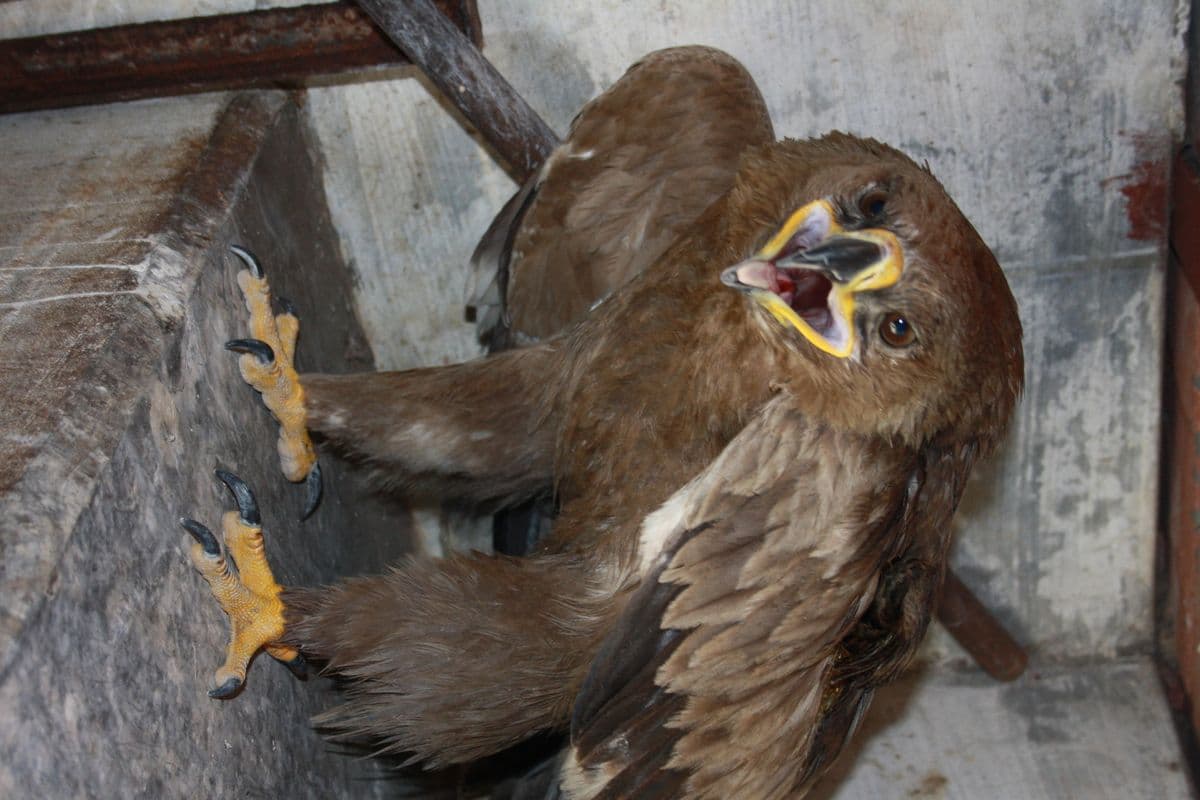
Steppe Eagle in recovery enclosure at Wildlife Rescue, showing full body with dark brown plumage and yellow talons
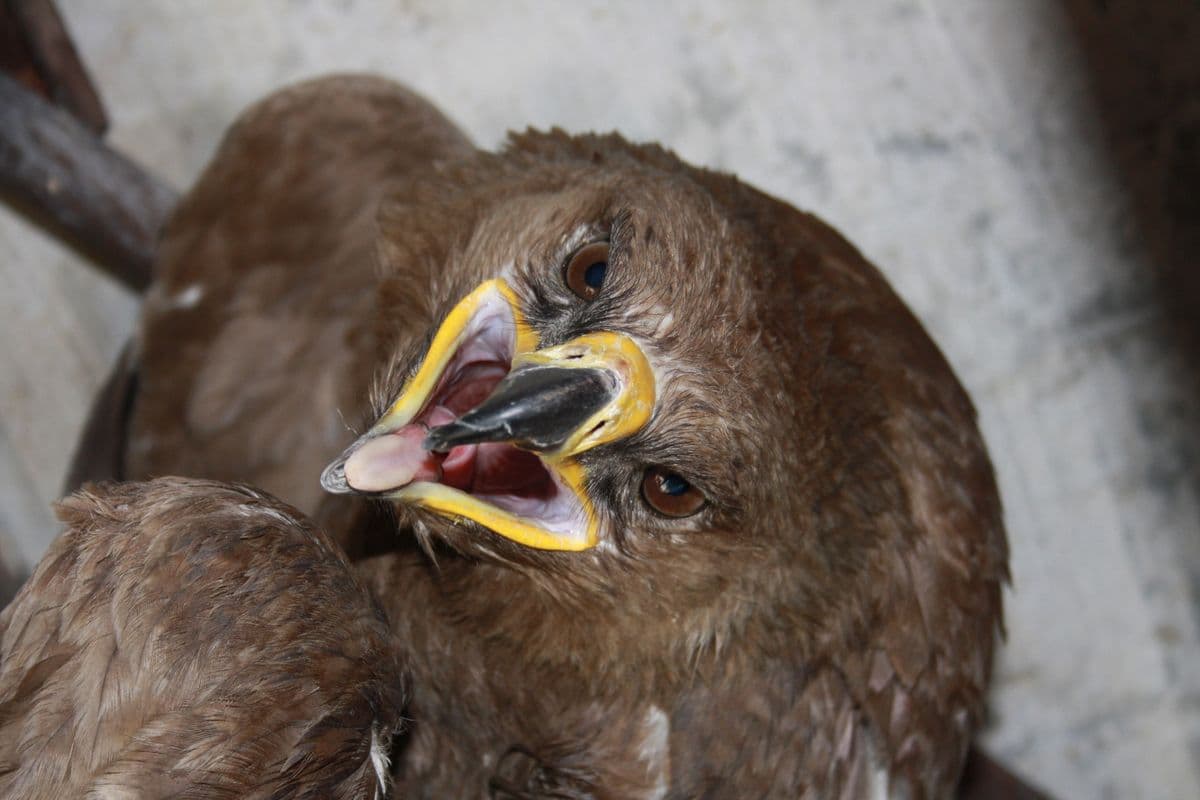
Steppe Eagle close-up during examination, displaying broad yellow gape and brown plumage
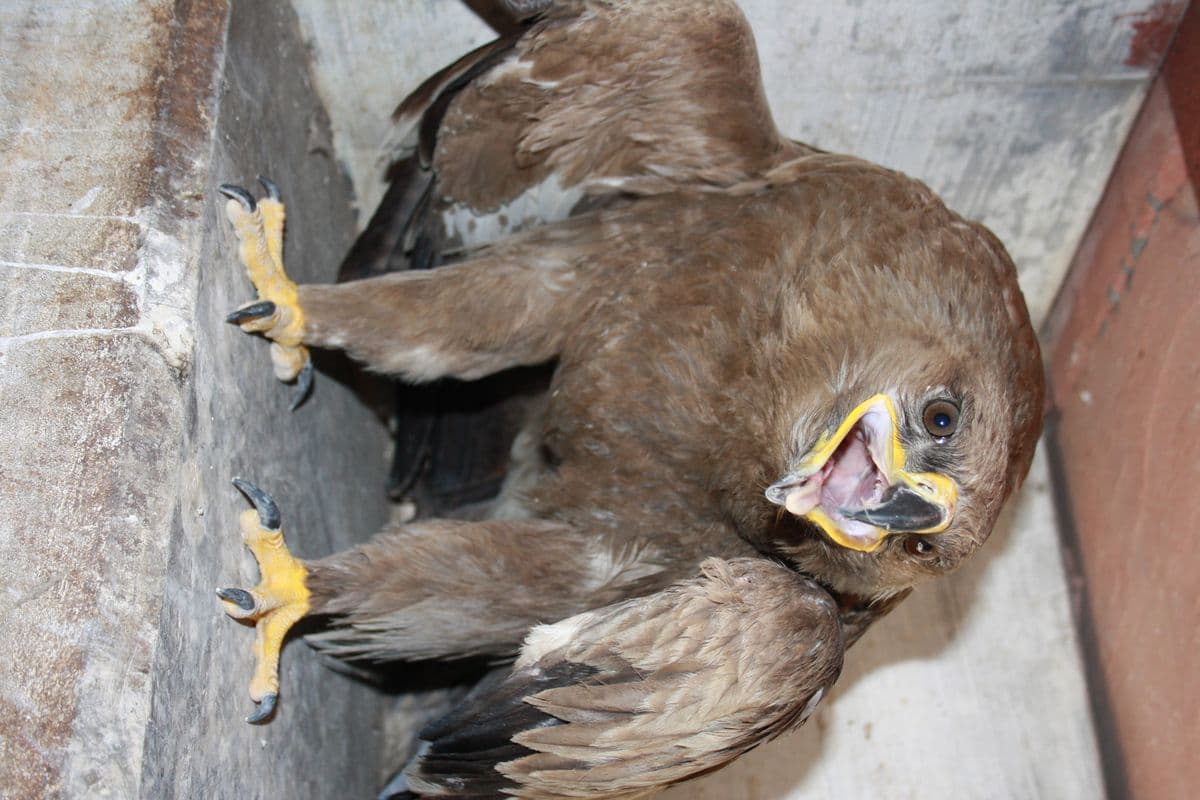
Steppe Eagle being assessed at Wildlife Rescue clinic, showing powerful yellow feet and dark feathering
Steppe Eagles fitted with GPS satellite trackers have been recorded crossing the Himalayas at altitudes above 4,000 meters during migration. One famous tracked eagle named 'Min' ran up a $2,600 roaming bill by sending SMS-based GPS data while flying through Iran — the researchers had to crowdfund to pay the phone bill.
Your donation directly funds the rescue and rehabilitation of Steppe Eagles and other birds in Delhi.
