Wildlife Rescue
Wildlife RescueRaptor Rescue & Rehab
HomeAboutAll That Breathes
BlogContact UsReport A Tagged Bird
Donate Now
Donate
Wildlife Rescue

The world's largest raptor rescue facility, based in Delhi, India. Featured in the Oscar-nominated documentary "All That Breathes." 39,000+ birds rescued since 2010.

Quick Links

  • About Us
  • Our Specialty
  • Species
  • Donate
  • Press & Media
  • All That Breathes
  • CSR Brochure (PDF)
  • Contact

Contact

  • C-6/1, Rehmani Chowk, Street No. 9, Wazirabad Village, Delhi - 110084, IndiaRegd: 2970, Shah Ganj, Ajmeri Gate, Delhi - 110006, India
  • +91 98100 29698
  • nadeem@raptorrescue.org

Stay Updated

Get monthly rescue updates and conservation news.

© 2026 Wildlife Rescue. All rights reserved.

India: 80(G) Tax Exempt Reg. No. AAATW2352B25DL02  |  USA: 501(c)(3) via Raptor Rescue and Research Inc. (EIN: 87-3289299)

All Conditions
Avian Pox
Serious

Avian Pox

A viral disease seen only in juvenile birds, causing wart-like growths on skin, feet, and around the eyes. Can blind birds and prevent feeding if untreated.

Juveniles

only

~60/year

treated annually

3–6 weeks

avg. recovery time

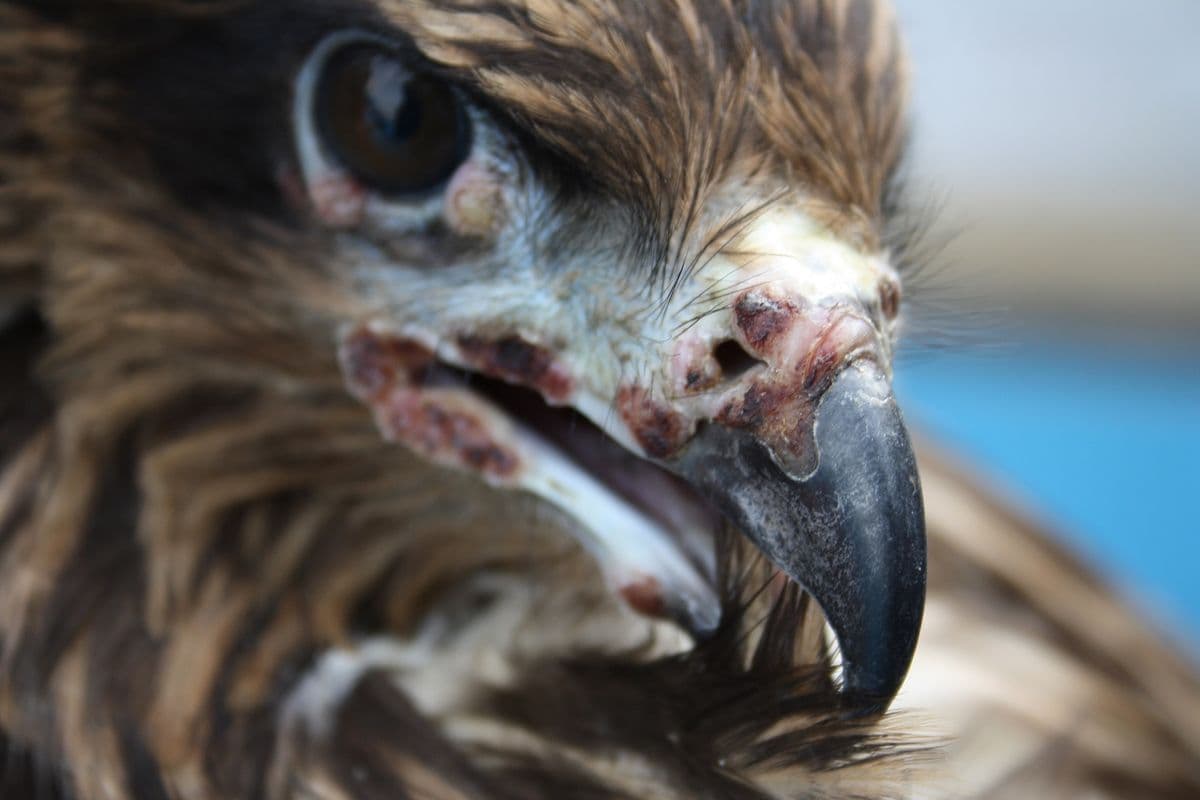
Avian pox is a viral disease caused by Avipoxvirus. At Wildlife Rescue we see it exclusively in juvenile birds — adult raptors and adult birds in general have already developed immunity from earlier exposure. We treat roughly 60 juvenile cases per year. The disease produces wart-like growths on unfeathered skin — feet, legs, the base of the beak, and around the eyes — that can swell shut, blind the bird, or interfere with feeding. The virus is transmitted primarily by mosquitoes, and also through direct contact with infected birds or contaminated surfaces. In Delhi's warm, humid climate — especially during and after monsoon — mosquito-borne transmission spikes dramatically, which is when we see the seasonal influx of juvenile cases.

Juvenile Black Kite with avian pox lesions — warty growths visible around the beak and cere area

Juvenile Black Kite with avian pox lesions — warty growths visible around the beak and cere area

Causes

  • Mosquito bites — the primary transmission vector
  • Direct contact with infected birds at communal roosting or feeding sites
  • Contaminated surfaces — perches, feeding stations, water sources
  • Open wounds that provide entry points for the virus
  • Juvenile immune systems that haven't yet been exposed to the virus

Symptoms to Watch For

  • Wart-like nodules on feet, legs, beak base, and around eyes
  • Crusty, raised lesions that may be yellow, brown, or dark
  • Swollen or closed eyes — can lead to blindness if untreated
  • Difficulty eating if lesions develop around the beak
  • Weight loss and lethargy as the disease progresses
  • Stunted growth in young chicks

How We Treat It

Average recovery time: 3–6 weeks

1Isolation from other birds to prevent transmission
2Supportive care — fluids, nutrition, warmth
3Gentle removal of dried pox scabs when ready to separate
4Topical antiseptic application to lesion sites
5Antibiotic therapy to prevent secondary bacterial infections
6Eye drops and treatment if lesions affect vision
7Immune support — vitamin supplementation

Real Case Study

G

Photo Placeholder

Juvenile Blue Rock PigeonReleased

Guddu the Juvenile Blue Rock Pigeon

Brought in by a temple priest from Jama Masjid area with severe pox lesions covering both eyes — completely blind. After 3 weeks of careful treatment including daily eye drops and antiseptic application, the lesions dried and fell away. Guddu regained full vision and was released at the temple where the priest continues to watch over the resident flock.

Most Affected Species

  • Juvenile Black Kite
  • Juvenile Blue Rock Pigeon
  • Juvenile Rose-ringed Parakeet
  • Juvenile Common Myna
  • Other juvenile passerines (occasional)

How You Can Help Prevent This

  • Mosquito control at rescue facilities and known roost sites
  • Regular disinfection of communal feeding and watering points
  • Quarantine of new admissions to prevent facility spread
  • Reduce overcrowding at pigeon feeding sites (temples, markets)
  • Vaccination programs where feasible for captive populations

Found a bird with these symptoms?

Time is critical. Call us now.

📞 +91 98100 29698

Fund Treatment for Avian Pox

Your donation directly funds the treatment and rehabilitation of birds suffering from avian pox.

Donate Now