A purpose-built aviary complex designed for one mission: rebuilding the strength, instincts, and wildness a rescued raptor needs to survive on release. From padded recovery cages to open flight aviaries — every space is engineered for the bird inside it.
Multi-stage
Aviary Complex
Species-Specific
Housing Design
Pre-Release
Flight Conditioning
Surgery is only the first step in a bird’s return to the wild. The most demanding—and time-intensive—work of rescue begins after a bird leaves the operating theatre.
A Black Kite recovering from a repaired propatagium may require three to six weeks of structured flight conditioning before it can hunt confidently again. An orphaned Spotted Owlet chick may remain in care for several weeks before it is capable of surviving independently. An Egyptian Vulture with a healed fracture must slowly rebuild strength and endurance in a controlled flight environment.
Our aviary complex is designed to support each of these rehabilitation journeys. Every enclosure type has been carefully developed—and continuously refined—based on lessons learned from previous years of hands-on rescue and rehabilitation work.
Each enclosure is purpose-built to support a specific stage of recovery.
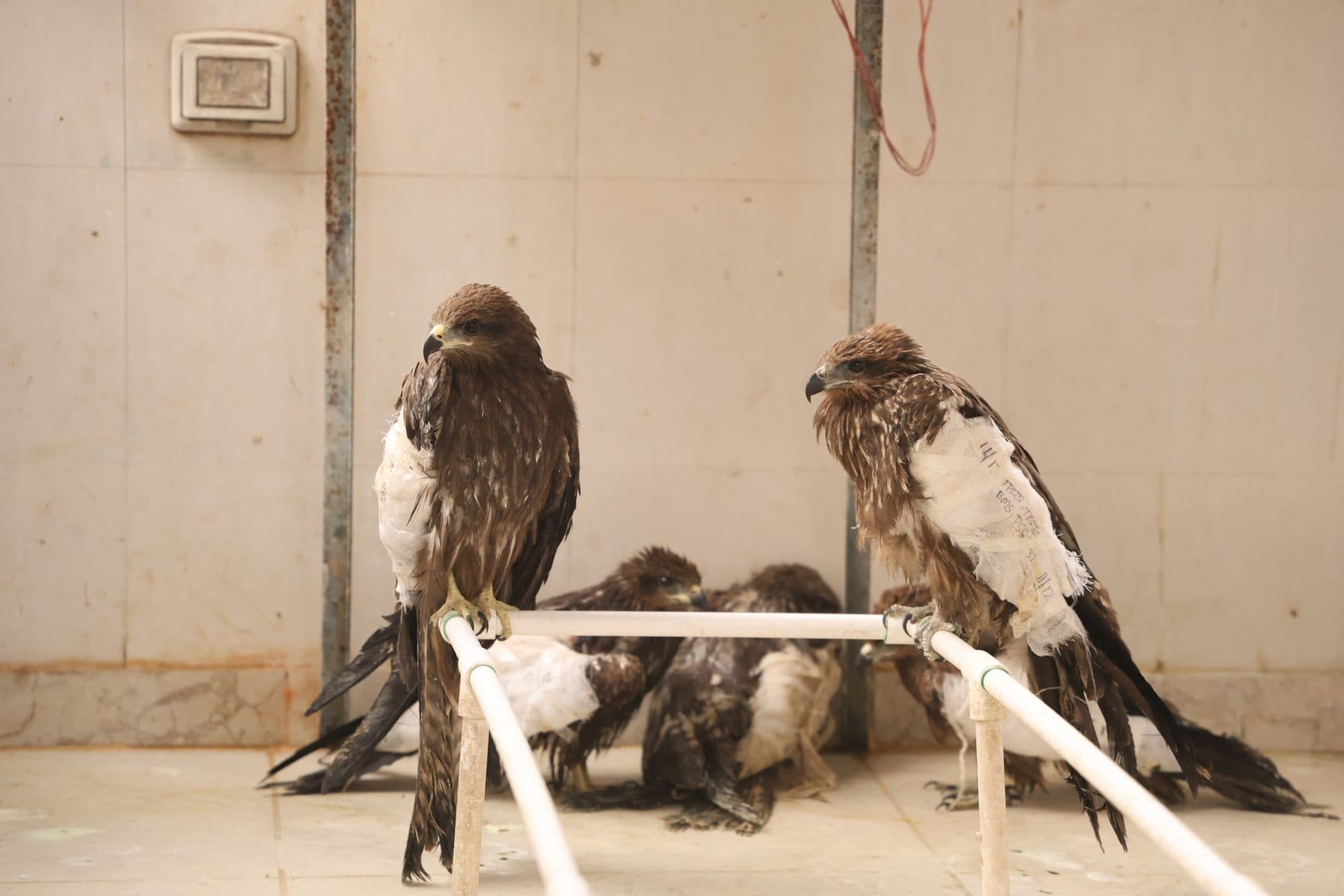
Ventilated enclosures for post-surgical patients. Limited movement protects freshly repaired wings during the first critical weeks of healing. Tiled floors and walls keep surroundings clean and hygienic.
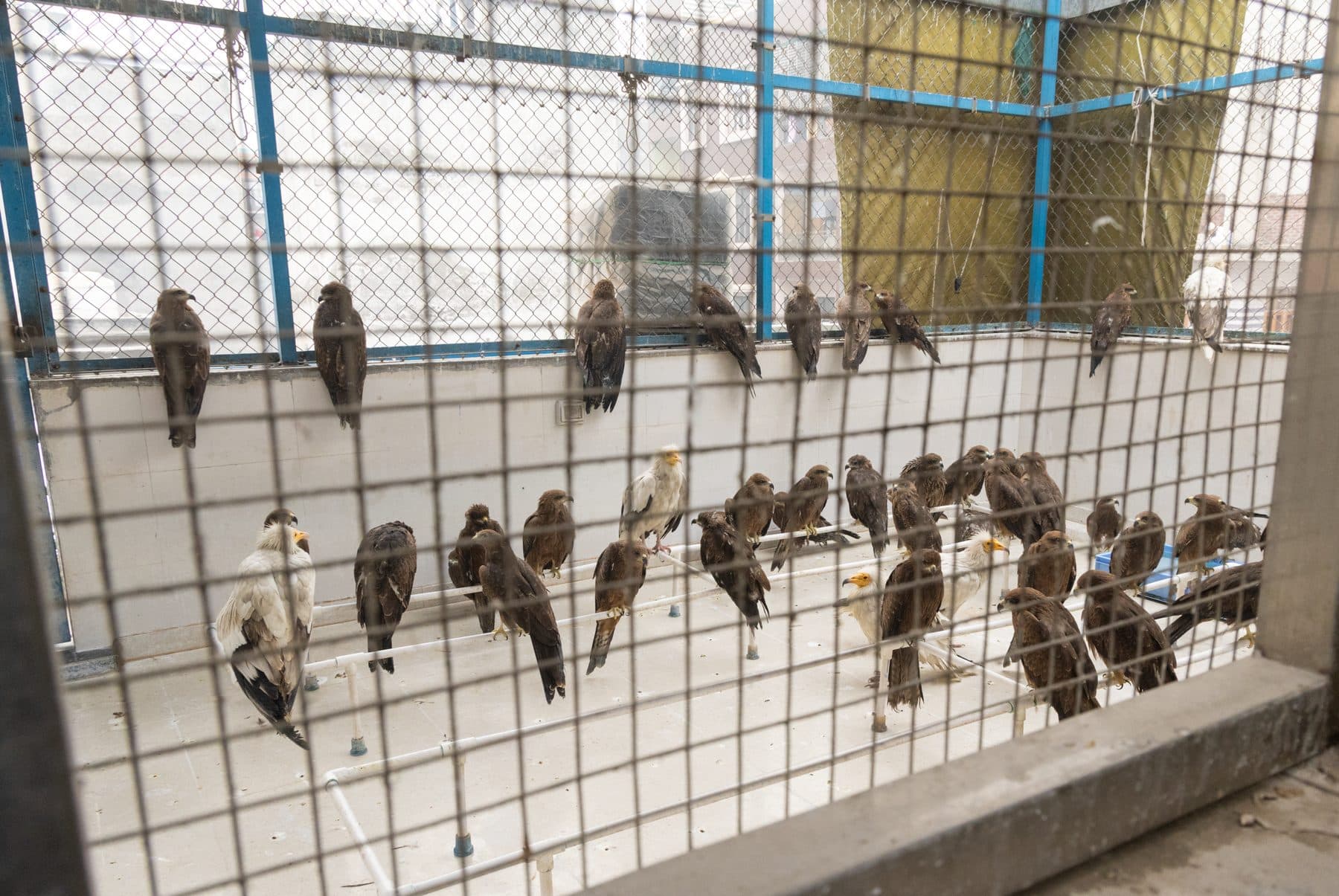
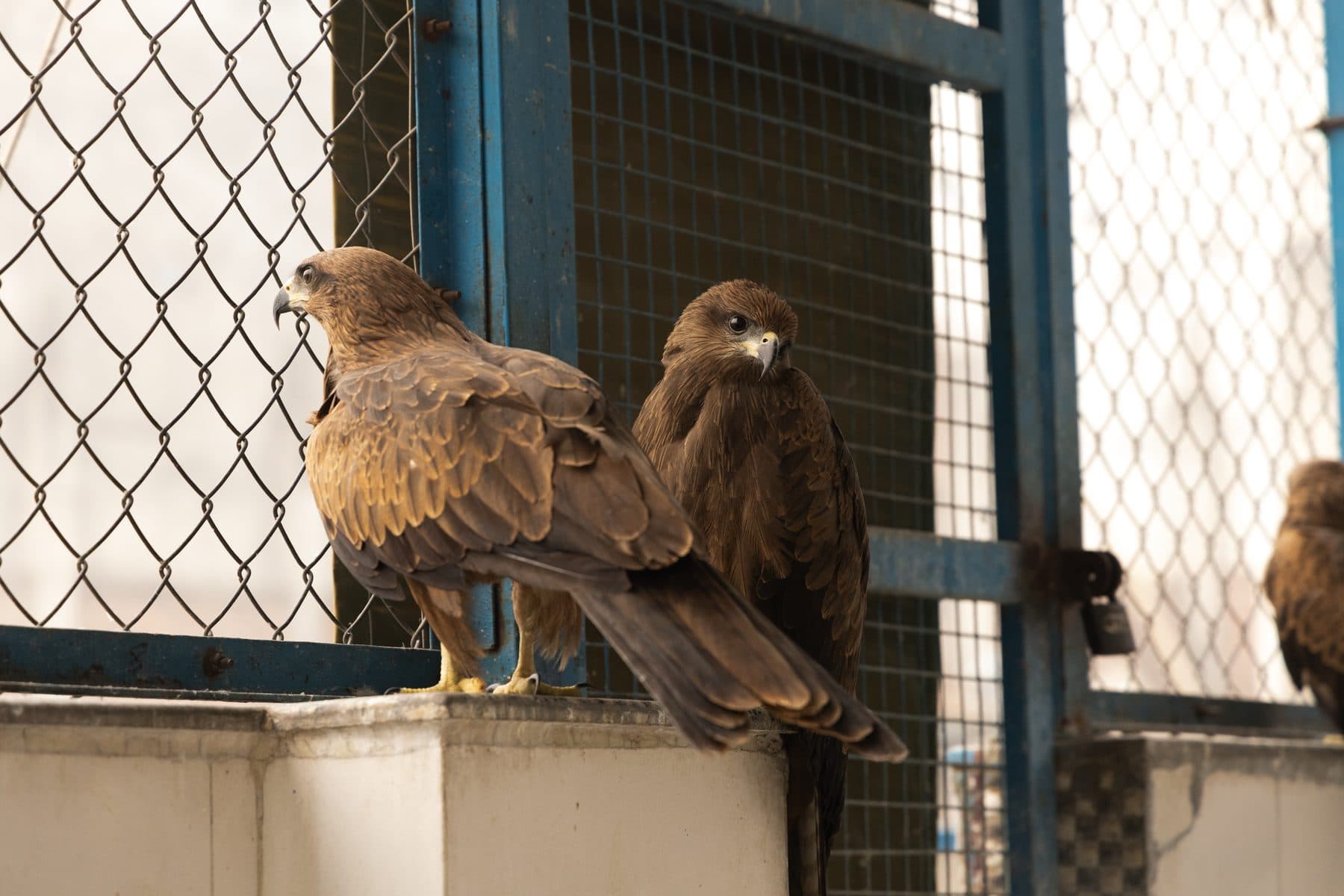
Spacious netted aviaries — the heart of our rehabilitation programme. Birds rebuild flight muscles, coordination, and stamina here over weeks, often months, before being assessed for release. Young birds learn to fly and manoeuvre, and an open section lets them fly out and return at will — a game-changer that gives them time to learn the food and water sources in the surrounding area for a successful rehabilitation. The food kept in our flight cage also helps feed birds that have flown off into areas outside their home range.
Warm, draft-free housing for orphaned and fallen hatchlings. Specialised feeding stations, gentle-handling protocols, and species-correct diets ensure healthy development from helpless chick to independent juvenile. Hatchlings are housed inside the clinic so they remain under constant observation, and a balanced diet ensures speedy growth.
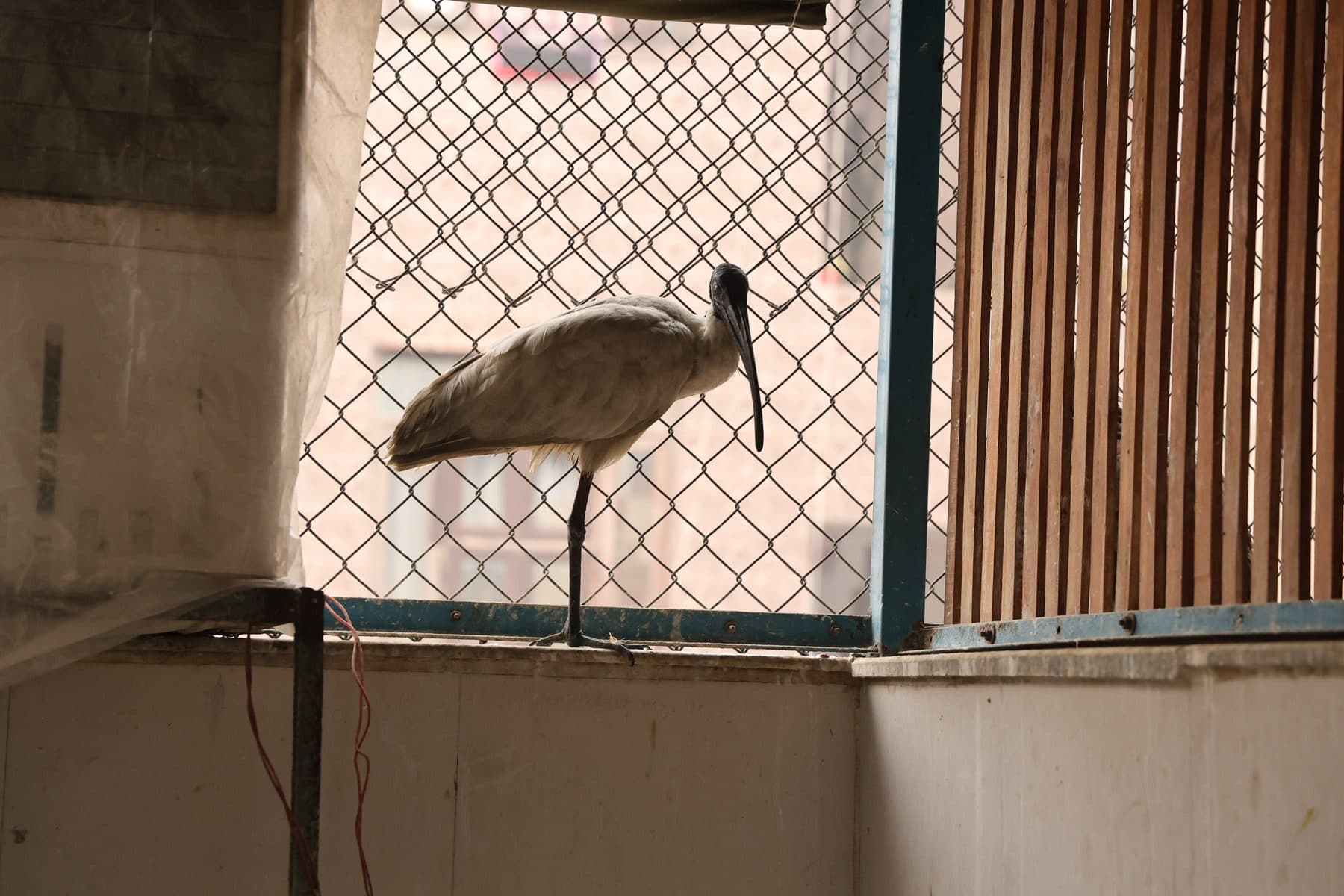
Black Kites, Egyptian Vultures, Barn Owls, Spotted Owlets, Shikras, and others all have different perching, lighting, and shelter needs. Each species houses in conditions tuned to its biology.
Semi-exposed enclosures that gradually re-acclimatise birds to Delhi's heat, humidity, monsoon, and temperature swings — a critical bridge between protected indoor recovery and the open sky. Each enclosure is equipped with moisture-air coolers.
Dozens of raptors share these spaces — Black Kites, Egyptian Vultures, owls, and others — at different stages of their journey home.
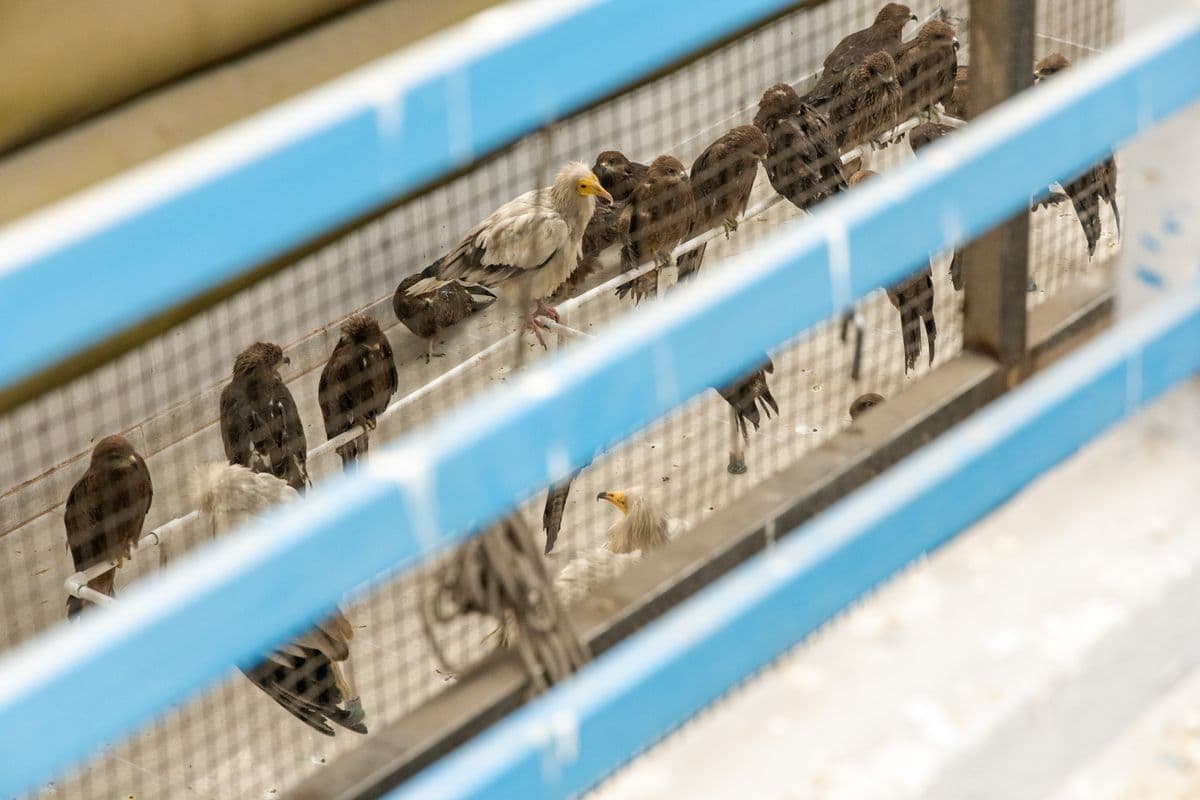
Recovery Enclosure — Mixed Raptors
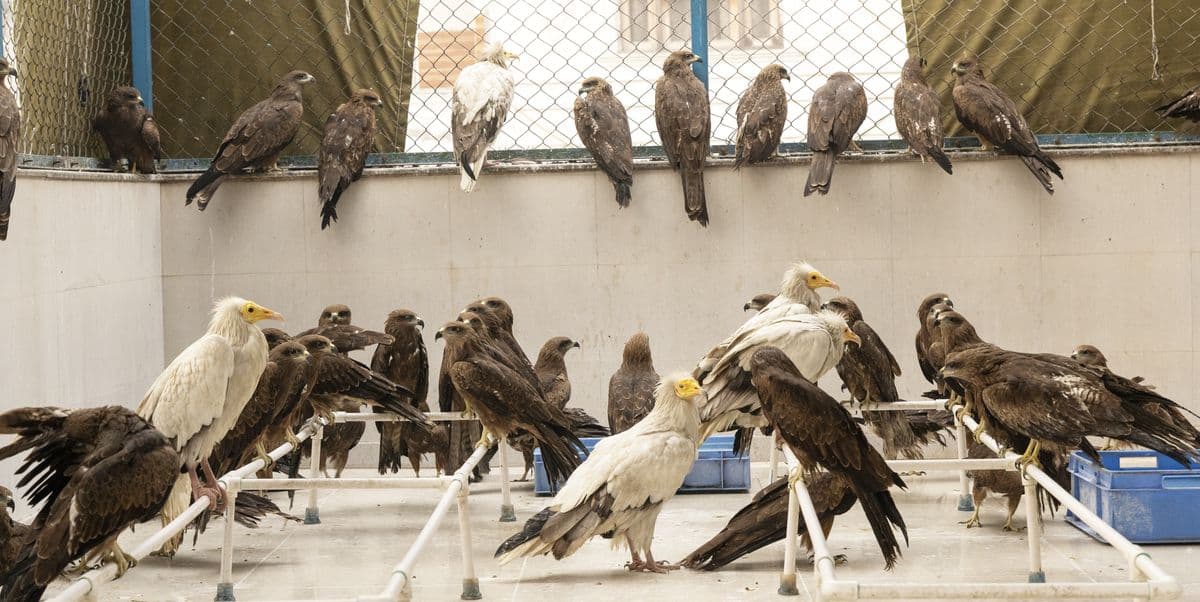
Main Flight Aviary — Pre-Release
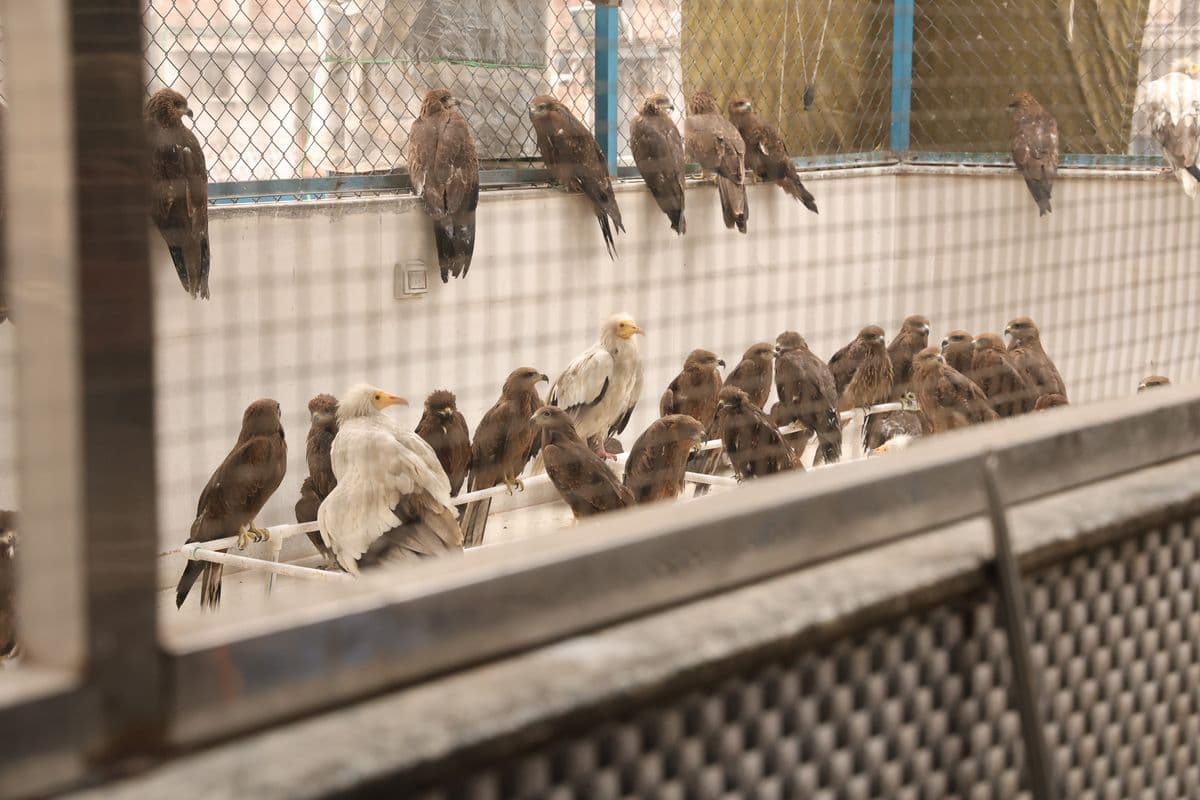
Aviary Interior — Species Mix
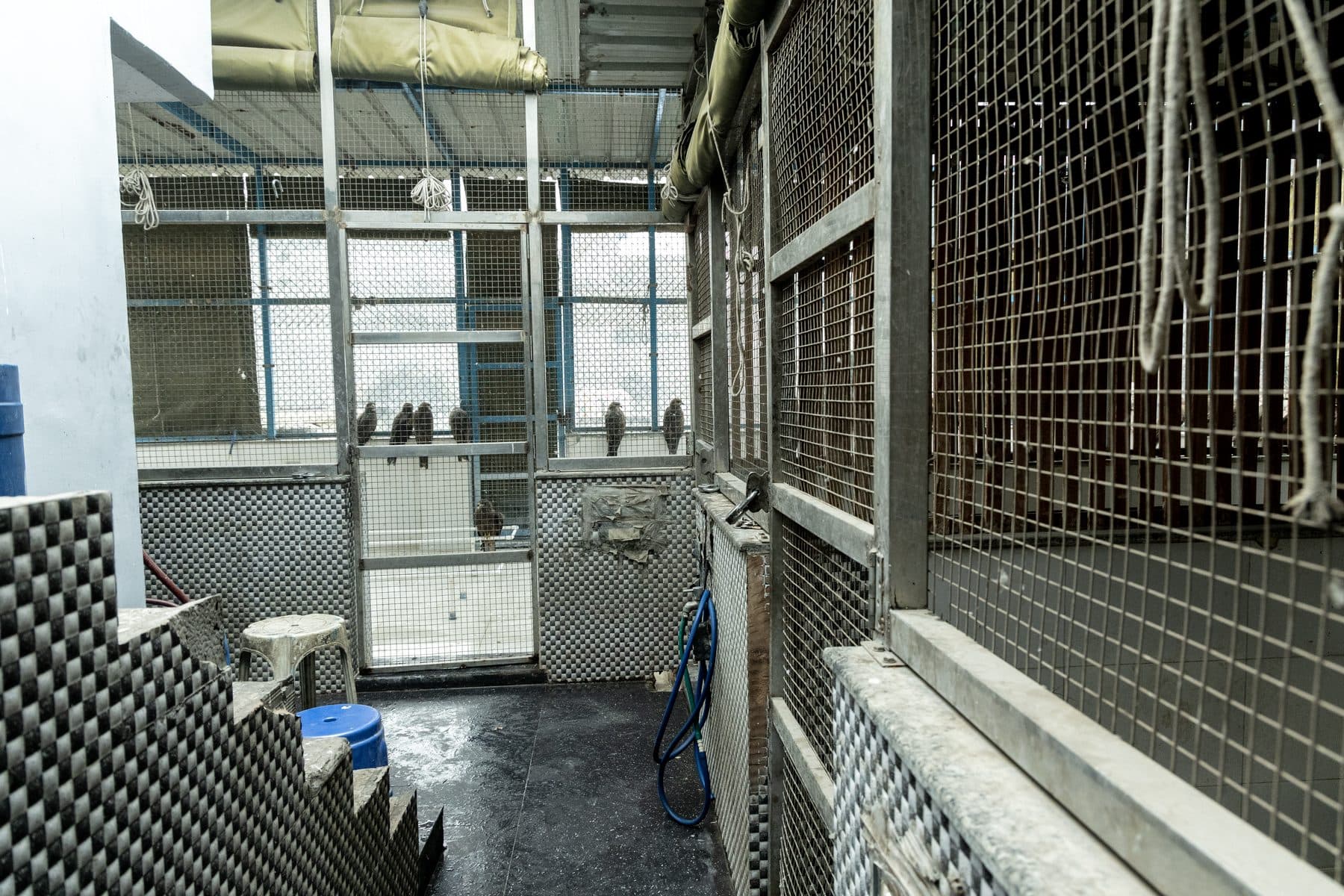
Inside the Aviary Complex
Multi-Level Perching
Flight Conditioning Enclosure
Aviary Complex — Rehabilitation in Progress
Enclosure Interior
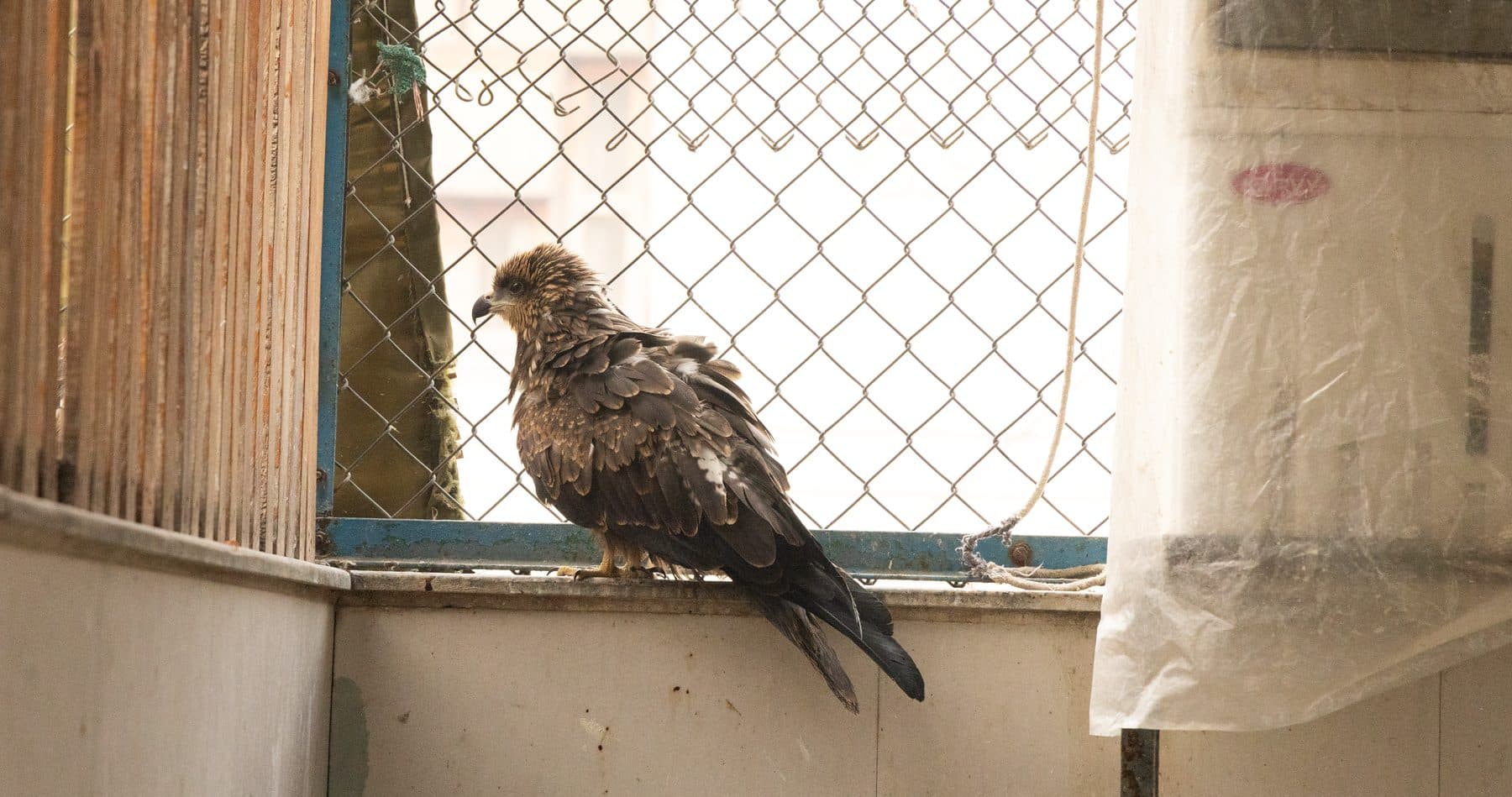
Aviary — Wide View
The design principles behind every cage, perch, and aviary in our complex.
Visual barriers, quiet zones, and minimal human contact during recovery. Wild raptors are not pets — every enclosure protects their wildness so they can return to it.
Easy-clean surfaces, segregated wards for infectious cases, and routine sanitation protocols. Cross-contamination between recovering and incoming birds is the silent killer in rescue work — we engineer against it.
From the moment a bird leaves the clinic to the day it returns to the sky.
Once medically stable and feeding independently, the bird leaves the ICU and enters the aviary complex. The medical work is done; now the rebuilding begins.
Restricted movement protects healing surgical sites. Daily wound checks, weight monitoring, and gentle physical therapy on bandaged wings.
First short flights. Distance is built up day by day. Wing strength, balance, and stamina are tracked closely — setbacks are caught early.
Large open space. The bird must demonstrate sustained flight, accurate landings, and full range of motion. Self-feeding skills are reinforced.
Re-acclimatisation to Delhi's weather extremes. The bird experiences sun, wind, rain, and ambient noise.
Final flight assessment. The bird is taken to a suitable release site — in a protected forest — and returned to the wild. Birds like Black Kites are slow-released from our flight cage.
Building and maintaining specialised housing is one of the most expensive parts of running a rescue. Your donation can fund a recovery cage, an aviary expansion, or chick-nursery upgrades.
